


PITO Article
Mid-Price Ceramic Tableware Is the Fast-Growing Tier (41.9% Share): What Commercial Buyers Get
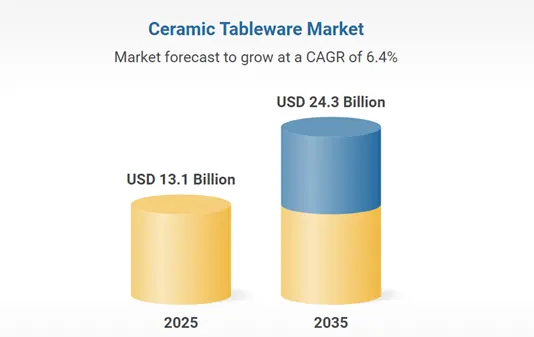
ResearchAndMarkets put out a market report in August 2026 with a number worth noting: the mid-price ceramic tableware tier held 41.9% of the global market in 2025, and it is growing faster than any other band at a 7.3% CAGR through 2035. Hotels, restaurants, and distributors keep asking the same thing: what does the mid tier actually deliver, and can a supplier hit real quality without charging luxury prices?
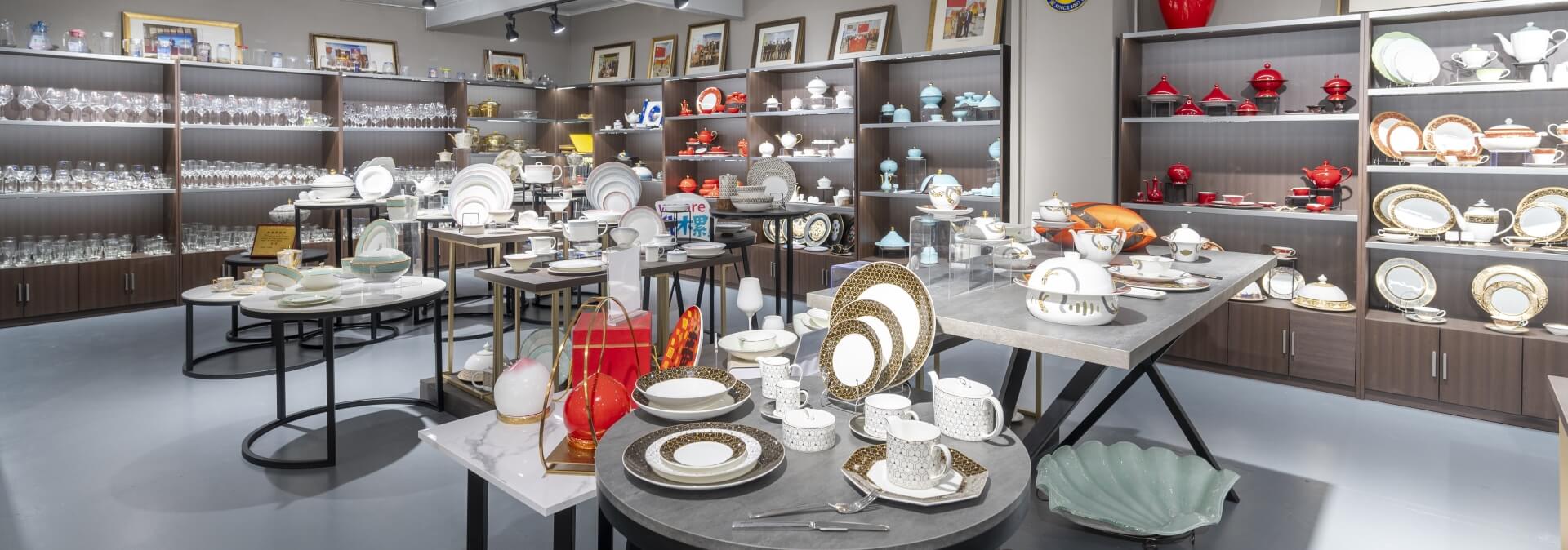
We have been making ceramic tableware at P&T Royal Ware for more than 40 years, so we watch this shift from the factory floor, not a forecast slide. Below I explain why the mid tier is taking share and how a manufacturer actually holds quality while keeping the price sane.
Why Is the Mid-Price Ceramic Tableware Tier Growing the Fastest?
The report lays it out plainly. Buyers are trading up from economy lines to mid-range pieces that get the balance of quality, design, and price right. Incomes are rising and online catalogs are wider, so decent ceramic tableware is no longer hard to find. Premium lines still grow too, mostly in hotels and restaurants where durability and looks close the sale.
The mid tier lives in the gap between the two. It skips the fragility you get with the cheapest ware and the markup you pay for famous luxury names. The whole market grows about 6.4% a year; the mid tier runs ahead at 7.3%.
Two buyer groups pull this along. The first is the middle class in Asia-Pacific and the Middle East, buying better home tableware for the first time. The second is hospitality, which buys by the container and replaces on a fixed cycle. Neither group wants the rock-bottom option or the most expensive one. They want it to work and not cost a fortune.
What Do Commercial Buyers Actually Get in the Mid Tier?
The mid tier gives you real quality without the luxury bill. For HoReCa tableware programs, a few traits matter every service cycle:
- It resists chipping through daily use
- It holds heat for hot plates going out
- It survives dishwashers and microwaves
- The glaze stays clean and even across a whole order
Most buyers fixate on the sticker price. Cost per use tells the real story. A piece that runs through thousands of wash cycles beats a cheap one that chips in three months, even if the cheap one looked like a bargain. The mid tier is where that math finally favors the operator.
You will not see the weak glaze or warped rims that cheap economy ware shows. You also skip the premium that famous brands stack on. The mid tier is built for people who buy by the pallet and reorder on schedule.
How Does a Manufacturer Deliver Quality at Mid Price?
Scale and process control are the answer. P&T Royal Ware runs a 40,000 square meter plant in Chaozhou with over 40 years behind it. Two production choices keep quality up and price down.
We fire fine bone china with 45% bone ash at 1,320°C in one pass. The bone ash builds strength and a clean white body. One firing saves energy and leaves fewer defects. Our fine porcelain goes through a high-temperature process that packs the body dense and hard.
We own the line end to end, from shaping through glazing to firing, so a 10,000-piece run looks the same at piece one and piece ten thousand. That is how the mid price holds without shortcuts.
Our team checks every step, raw clay to finished glaze, and tests chip strength, glaze evenness, and color match before anything ships. Consistency is what a hotel cares about when the same pattern has to land across every table in every branch.
Our wholesale ceramic dinnerware range covers what hotels and restaurants reach for most: dinnerware sets, ceramic plates, bowls, and cups. We do custom shapes, patterns, and logo branding for commercial programs. A coordinated set keeps one look from the first course to dessert, and we can match plates, bowls, and cups in the same body and pattern so the whole table reads as a single program.
Buyers run hotels, restaurant groups, and distribution houses in more than 100 countries. They pick the mid tier because it holds up in a rush and still looks right when it lands on the table.
Is Mid-Price Ceramic Tableware Durable Enough for Daily Service?
Yes, and the numbers back it. The 45% bone ash in our fine bone china makes the body strong but light. Firing at 1,320°C in one pass vitrifies the piece, so moisture and wear stay out. Our fine porcelain gets the same treatment at high temperature. Both lines are built for the wash cycle and the dinner rush, not the display shelf.
For a commercial buyer, durability is the whole test. A piece that outlasts service drops the cost per use, even when the price sits in the middle.
FAQ
What does “mid-price” ceramic tableware mean?
It sits between economy and luxury. You get better material and finish than the cheapest ware without the markup that famous brands charge. Most hotel and restaurant buyers shop here.
Why is bone china used in commercial tableware?
Bone china with 45% bone ash is strong, light, and white. It takes the abuse of service and still looks refined on the table, which is why many HoReCa programs choose it over basic porcelain or stoneware.
Can I order custom logo tableware at mid price?
Yes. P&T Royal Ware does custom shapes, patterns, and logo branding on commercial orders. We run OEM and wholesale programs for hotels, restaurants, and distributors.
Contact our team for a catalog or to talk through a custom program. We will send material options, minimum order quantity, and lead time based on your market.
Ready to Build Your Commercial Tableware Program?
Planning a hotel or restaurant rollout? Talk to our team. We make fine bone china and fine porcelain for HoReCa buyers in more than 100 countries. Request a catalog or a quote on our contact page, and we will match the right pieces to your service.


LET'S TALK TOGETHER
Lorem ipsum dolor sit amet, consectetur estor adipi isicing elit, sed do eiusmod tempor este uterre incididui unt ut
