




PITO Article
Restaurant Dinnerware Sets: Standardizing Your Table Top
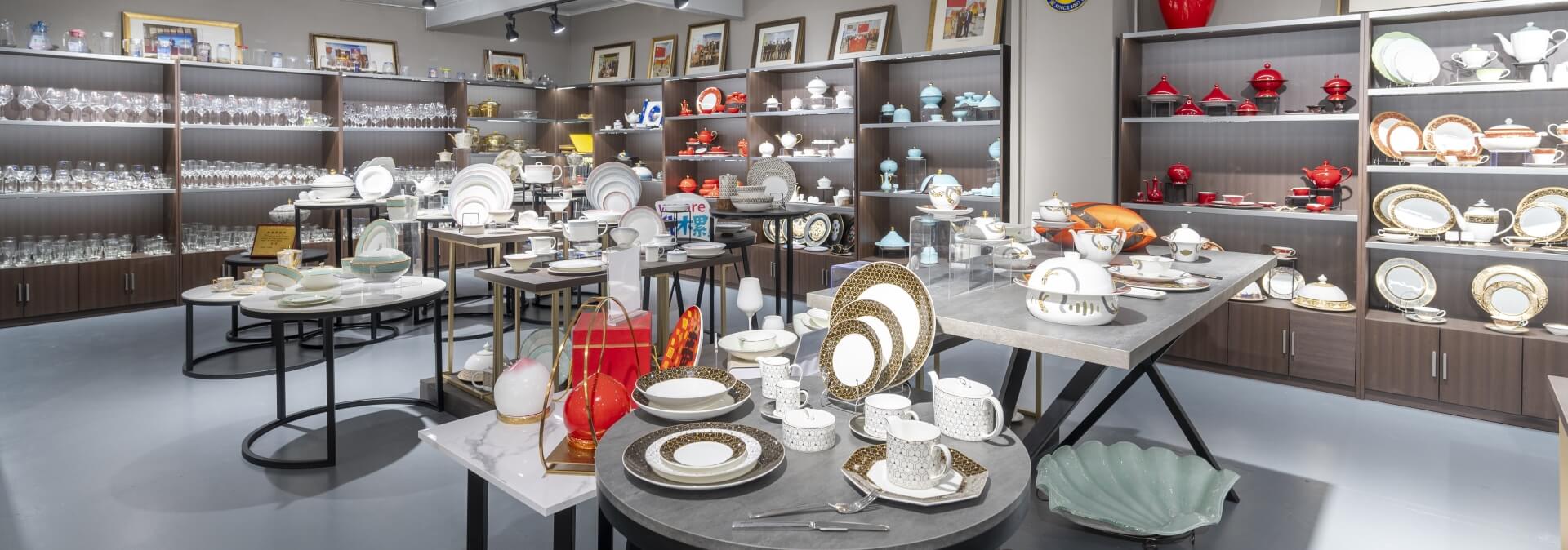
The table top is the first thing a guest notices. When the restaurant dinnerware sets on every table share one shape, the room looks planned and the back of house stops hunting for mismatched pieces. Standardizing the top means choosing one system for the whole service, from the first course to the last.
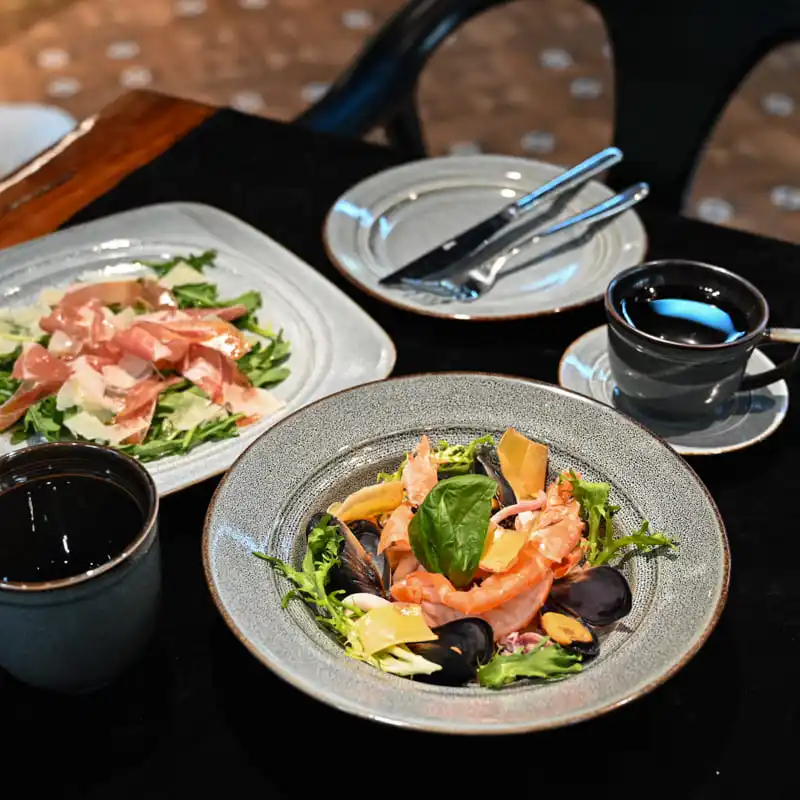
A unified top also helps every photo that leaves the building. When each shot uses the same rim, foot, and glaze, the brand reads across menus, websites, and social posts. A property that treats the top as part of the brand, not just the bus cart, gets more value from one set than from ten discounted patterns.
Why standardize one dinnerware set across the table top?
Three gains show up fast:
- Brand consistency: the rim, glaze, and foot look the same from first course to last.
- Simpler replenishment: one par plan, one sample to match, fewer SKUs to stock and reorder.
- Faster training: staff learn one stacking and busing habit instead of a rule per pattern.
The cost of not standardizing is quiet but real. Mixed patterns force larger safety stock, make one chipped piece visible, and slow the pass during a rush. A unified top turns the plate rack from a liability into part of the brand.
What pieces are in a standard cover set?
A cover is one guest’s full place setting. For most restaurants it looks like this:
| Piece | Typical role | Notes |
| Dinner plate (10 to 11 inch) | Main course | The anchor of the set |
| Soup or appetizer plate (8 inch) | Starter or soup | Often stacks under the dinner plate |
| Side or dessert plate (7 inch) | Bread, cheese, dessert | Smaller foot for tight stacks |
| Bowl (12 to 16 oz) | Soup, pasta, grain | Match the foot to the plate |
| Cup and saucer (6 to 8 oz) | Coffee, tea | Keep the handle comfortable for long shifts |
The cup and saucer are easy to overlook, yet they are the piece guests hold and the most likely to carry a logo. Getting the handle and proportion right matters more than the count. This is a starting shape, not a fixed rule; a program can trim or add pieces based on the menu.
Which material should the daily run use?
The material sets how the set behaves under load. For a high-turn operation, each material fits a different scene:
- Fine porcelain (vitrified, high-fire), the daily workhorse for high-frequency, high-turnover service (banquet, buffet, busy runs) where pieces cycle through the washer many times a day. This is what most dinnerware sets for restaurants use for daily service.
- Fine bone china (45% bone ash), for premium dining where thinness, translucency, and hand-feel sell the experience: fine-dining feature courses, afternoon tea. Venues that lead with the experience can run it daily; wash survival depends on glaze and decoration, not the body alone.
- Fine china (bone-ash-free, same family), a midweight step between fine porcelain and fine bone china for the bone-china look without the lightest body.
- Royal white porcelain, a clean uniform white across the whole top; its even surface makes any chip or stain obvious at a glance on the pass.
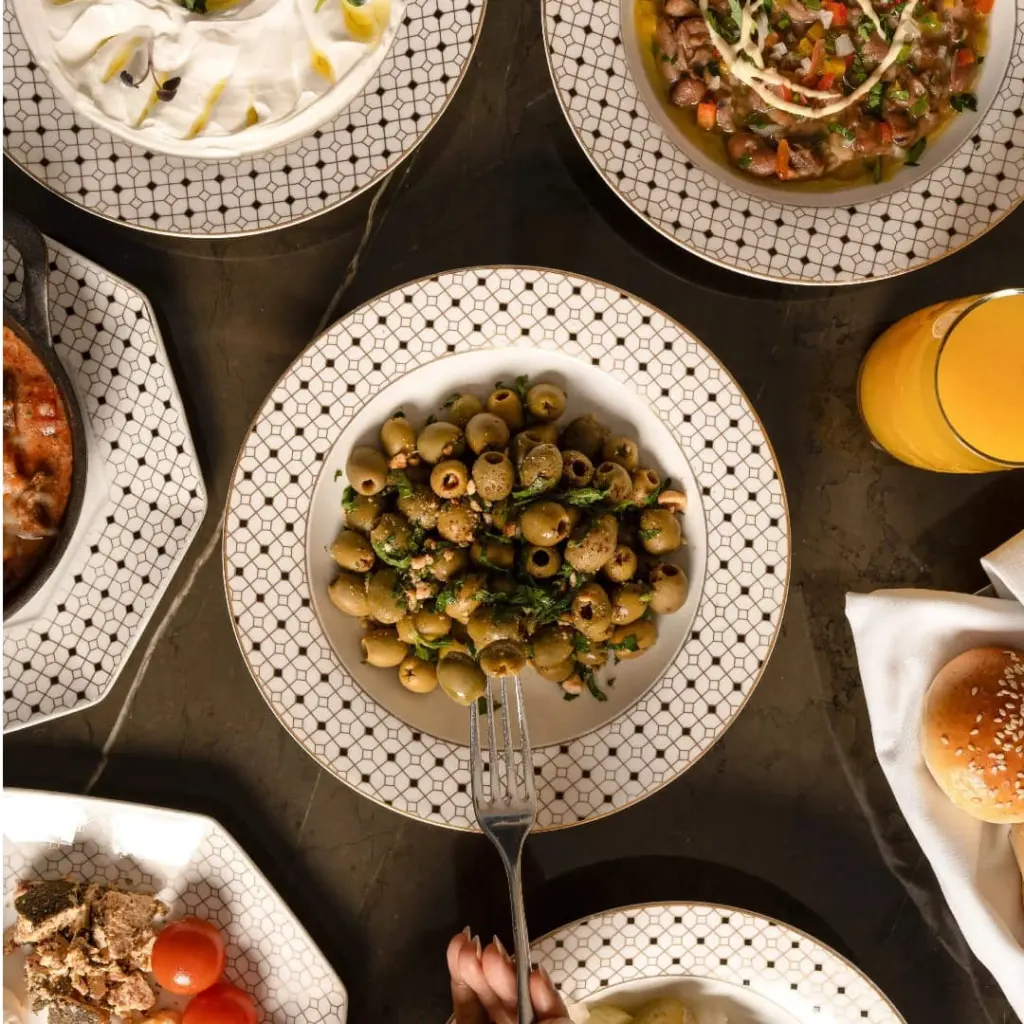
Pick the body to the room, not to a ranking. Each material has its place; the mistake is forcing one to do a job the service never asked for. The daily body takes the washes; the accent carries the moment. That split also keeps replenishment simple, because high-volume and show pieces are ordered on different rhythms. Read the menu first: a pasta cover leans on the bowl, a tasting menu on the rim, a banquet on stack height. The material follows the service, not the other way around.
Tip: Decide the accent before you buy, not after. A late-added pattern is the fastest way to break the unified look you paid for.
How do you match the set to your service style?
- Fine dining leans on rim presence and foot geometry, because the plate is part of the plating story and guests photograph it.
- Banquet leans on stack height and weight, because hundreds of covers move inside one service window.
- Buffet leans on durability and footprint, because pieces travel and sit in open view.
- Cafe leans on cup and bowl volume, because the day runs on coffee and grain bowls.
A banquet plate built like a fine-dining plate will not survive the stack; a fine-dining plate built like a banquet plate will not frame the food. Both the material and the shape follow the service.
How many sets should a restaurant order?
Quantity should follow operations, not a fixed formula. Start from seats and covers, then add par for turns per day, wash-cycle length, expected breakage, and reorder lead time. A 120-seat restaurant at two turns with same-day wash might run roughly 3 to 4 covers of each piece per seat as a working par, then adjust from the first month of real breakage. A 300-cover banquet needs its own plan built around one service window. Seasonality matters too: a property that doubles its covers in summer should plan par for the peak, not the average. The first month of real data beats any estimate made before opening.
What mistakes break a standardized top?
- Late pattern additions: a logo cup added after launch rarely matches the original glaze.
- Mixed vendors: two factories read the same drawing differently, so reorders drift in color and foot even when the spec is identical.
- Over-broad accent use: an accent meant for the feature course migrates to the daily run and the top loses its hierarchy.
- No par review: a par set once and never checked lets breakage creep until a chipped piece becomes the normal one on the table.
We build the set as a tableware program, not a one-off purchase, so the pieces actually fit the way the room runs, the same method we use for recognized names such as PITO, where a standardized top protects brand recognition across every cover.
- Concept / Menu Analysis – We read the menu and the service style before drawing a single shape.
- Material & Shape Selection – We choose the body (fine porcelain daily, fine bone china accent) and the rim profile per outlet.
- Custom Design – Our team develops shape, glaze, and decal that carry the property’s brand across every piece.
- Sampling – You test the full cover, not one hero plate, before commit.
- Operational Testing – We check stack height, busing pace, and wash behavior as a set.
- Production / QC – Our factory runs body and glaze under ISO 9001 quality management. The standard is the system that supports consistency; reorders also match because we hold the same approved sample and batch process from first order to reorder.
- Delivery – We plan par levels against your seat count and opening date.
- Replenishment – Reorders track the approved sample, supported by regional agents.
For the durability side, see Vitrified Porcelain Plates: Why They Resist Chipping. For wash survival, see Dishwasher Safe Porcelain Dinnerware: A Commercial Guide.
Frequently Asked Questions
Q: How many pieces are in a standard restaurant dinnerware set?
A standard cover usually includes a dinner plate, an appetizer or soup plate, a side or dessert plate, a bowl, and a cup with saucer. The exact count follows the menu, not a fixed rule, and most properties keep one coherent set across all tables.
Q: Should dinnerware sets for restaurants use one material?
For the daily run, yes. One body (typically vitrified fine porcelain) keeps the top coherent and the storeroom simple. A second material such as fine bone china can carry the feature course in a premium venue without breaking the system. The choice is about the service scene, not about which material is “better”.
Q: How do I calculate how many sets to order?
Start from seats and covers, then add par for turns, wash-cycle length, expected breakage, and reorder lead time. A busy restaurant may plan several covers per seat; a single-window banquet plans around one service. The figure is a method, adjusted from the first month of real use.
Q: Can restaurant tableware be customized to our brand?
Yes. Shape, glaze, and decal can be developed to carry a property’s brand identity, and the set is tested as a whole before volume so the pieces stack and read as one top.
If you are planning restaurant tableware for a new opening or a refresh, send us four points so we can spec the right system:
- Project type (new opening / renovation / expansion)
- Service concept (fine dining / banquet / buffet / cafe)
- Expected quantity (by cover or by seat)
- Customization requirement (shape / glaze / decal / brand color)
Contact P&T Royal Ware with those details and we will return a standardized cover plan built around your menu and service.


LET'S TALK TOGETHER
Lorem ipsum dolor sit amet, consectetur estor adipi isicing elit, sed do eiusmod tempor este uterre incididui unt ut
