


PITO Article
White Porcelain Bowls for Restaurants and Hotels
Bowls do more work on a hotel or restaurant table than they get credit for. From soup and cereal to sides and desserts, a good white porcelain bowl covers several courses on one body. This guide covers sizes, materials, and the details that matter in daily service.
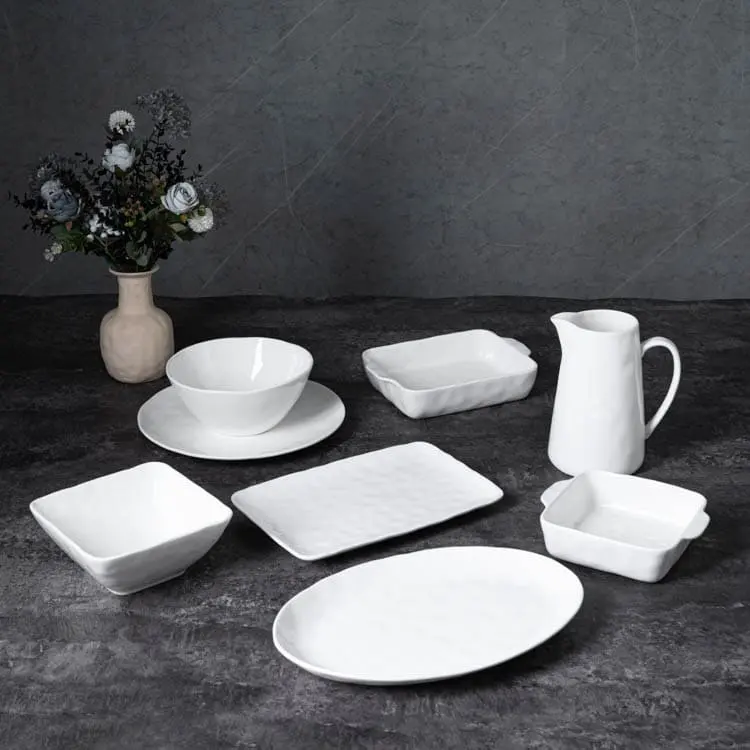
Why Bowls Deserve Their Own Spec
A bowl appears at more dayparts than a plate does. Breakfast brings cereal and fruit, lunch brings soup and pasta, dinner brings sides and rice, and dessert brings its own small bowl. Specifying bowls on purpose, rather than as an afterthought, keeps the program coherent.
- One white body unifies the day: the same white carries from the breakfast buffet to the late dessert course.
- Portion control stays visible: a defined bowl size helps the kitchen hold portions steady across shifts.
- Storage stays simple: a small set of bowl sizes covers most menus without a shelf of one-off shapes.
Soup Bowls vs Cereal Bowls
The two are easy to confuse, yet they serve different moments. Use this as a starting point, not a fixed rule.
| Type | Common capacity | Shape | Typical use |
| Soup bowl | 8 to 12 oz | Round, moderate depth | Soup, pasta, stews |
| Cereal bowl | 6 to 8 oz | Shallow, wide | Breakfast, sides, desserts |
| Pasta or salad bowl | 10 to 14 oz | Wider, shallow | Mains, salads |
The right size follows the menu and the portion, not a standard chart. A property that runs a heavy soup service will lean toward the deeper bowl, while a breakfast-focused venue will want the shallow one in volume.
Choosing Bowl Material for Service
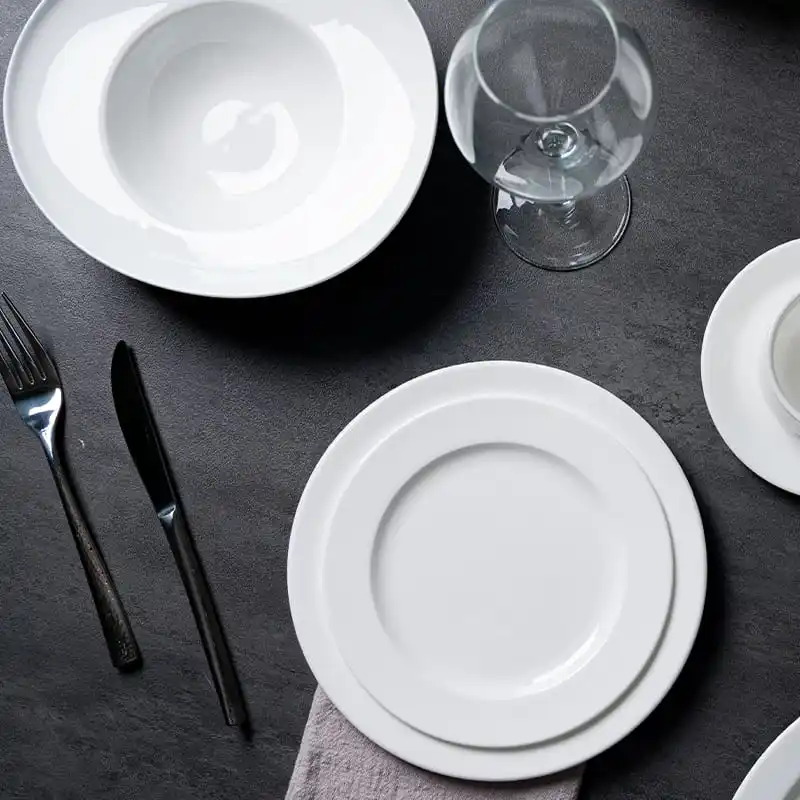
Material choice follows the scene, not a quality ranking.
- Uniform white service: royal white porcelain keeps the whole property on one clean body.
- High-turnover volume: fine porcelain takes the repeated washing and stacking of a busy breakfast or buffet run.
- Fine-dining accent: fine bone china lifts a signature soup or dessert course with a light, translucent note.
For commercial dishwasher use, performance depends on the bowl body, glaze, decoration, firing, and actual washing conditions. Bowls specified for commercial service should be checked against the supplier’s care instructions and, where appropriate, tested under the intended washing conditions before large-scale use.
Bowl Details That Matter in Service
Small details decide whether a bowl lasts on a busy floor.
- Rim and edge: a rolled or reinforced rim resists chipping during busing and stacking better than a thin, sharp one.
- Stacking: bowls should nest without wedging, so the crew stacks and carries them quickly.
- Foot stability: a clean, flat foot keeps the bowl steady on a moving tray.
- Weight balance: the bowl should feel steady without tiring the server over a long shift.
- Glaze and decoration: For commercial washing, check the glaze, decoration, firing, and product care instructions. Metallic decoration may require different care and should be checked against the product specification before machine washing.
We run bowl programs as an eight-step flow, from first menu read to restock.
- Concept and menu analysis: the menu sets which bowl sizes and how many.
- Material and shape selection: we match royal white porcelain or fine porcelain to the volume and the outlet.
- Custom design: shape, glaze, and decal carry the property brand, including white porcelain soup bowls for signature courses.
- Sampling: you test the bowls under real service light and portions.
- Operational testing: we check nesting, carrying, and wash turnaround before mass runs.
- Production and QC: our own plant and ISO 9001 quality management hold the batch steady.
- Delivery: quantities plan against seat count, daypart mix, and opening date.
- Replenishment: reorders match the approved sample so the white and the size stay the same.
Our white porcelain tableware line covers the full setting, with bowls as one part of it.
Frequently Asked Questions
Q: What size white porcelain bowl do restaurants need?
Size follows the course and the portion, not a fixed chart. A soup service leans toward 8 to 12 oz, while a breakfast or side bowl often sits at 6 to 8 oz. Match the bowl to the menu you actually plate.
Q: Are white porcelain bowls dishwasher safe?
Plain white bowls with a dishwasher-grade glaze and no metallic trim wash fine under commercial cycles. Any gold or platinum trim should stay out of the machine.
Q: Can bowls carry our logo or pattern?
Yes. Custom shape, glaze, and decal are normal on a white ground, including property logos and house patterns.
Q: How do large bowl orders stay consistent?
Consistency rests on locking one confirmed sample and repeating the batch process, with ISO 9001 as the quality management system. The standard supports the discipline but does not by itself freeze color or size.
Plan Your Bowl Program
Send us four details so we can scope the bowls: project type (new opening, renovation, or expansion), service concept (fine dining, banquet, buffet, or cafe), expected quantity (by cover or by seat), and customization requirement (shape, glaze, decal, or brand color).
For a wider view, see our banquet tableware configuration plan and our horeca tableware supplier guide.
Contact P&T Royal Ware with those details and we will return a bowl spec and sample pricing.


LET'S TALK TOGETHER
Lorem ipsum dolor sit amet, consectetur estor adipi isicing elit, sed do eiusmod tempor este uterre incididui unt ut
