




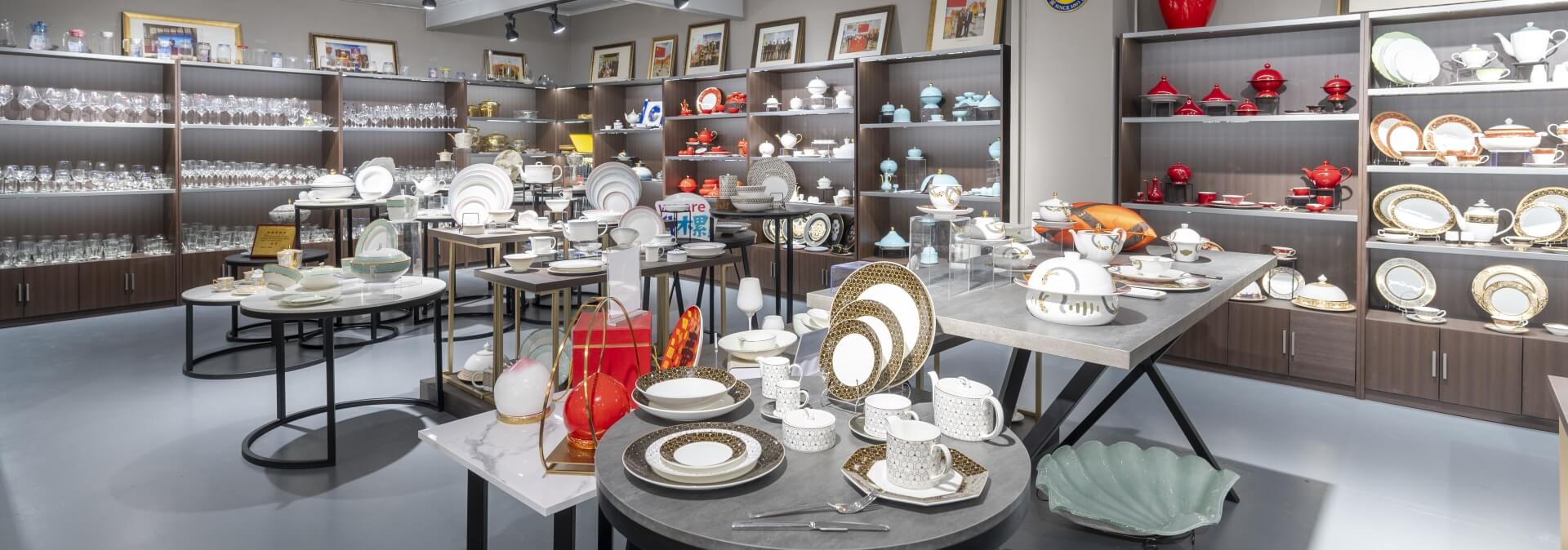
PITO Article
Restaurant Dinnerware: Plates, Bowls and Service Ware Explained
Restaurant dinnerware is the plates, bowls, and service pieces a dining room runs on every service. The term sounds simple, but the right mix depends on your menu, your covers, and your budget for breakage. As your Hospitality Tableware Solution Partner, we help you build the full cover set, from the first plate to the custom decal, then keep it consistent across every site. The sections below cover what counts as restaurant dinnerware, how to size plates to courses, and how to pick a material that lasts.
What Counts as Restaurant Dinnerware
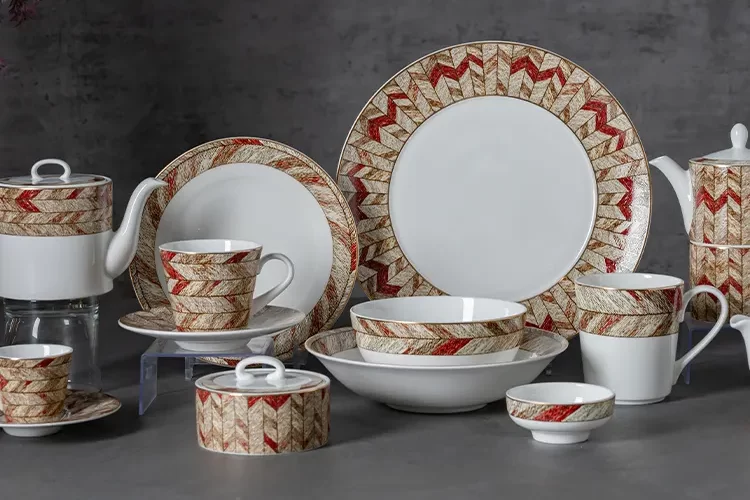
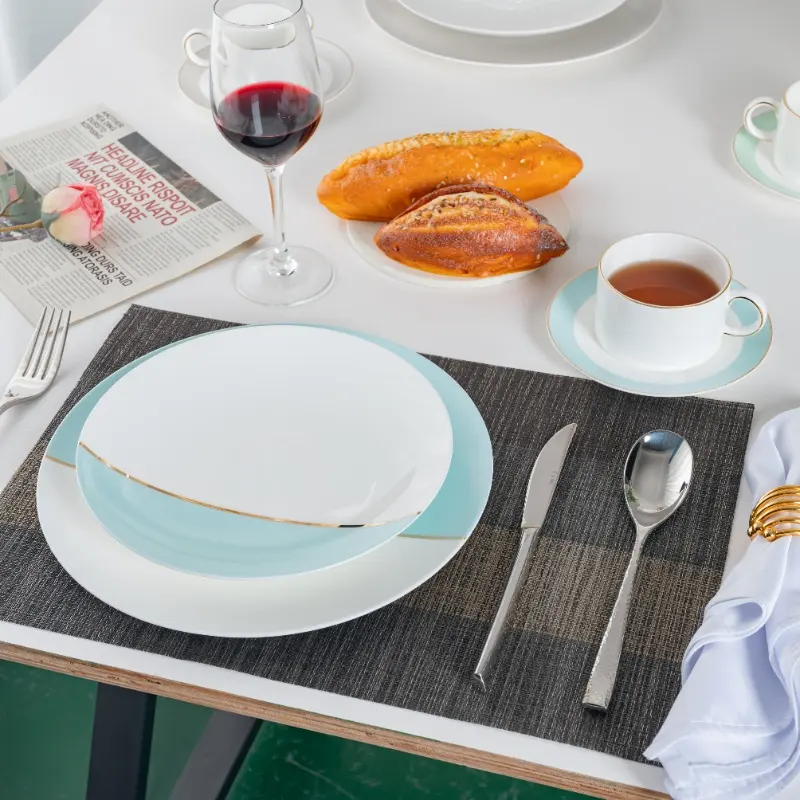
Restaurant dinnerware includes every piece a guest sees on the table. That means dinner plates, side plates, soup bowls, and the cups for water or tea. It also includes shared pieces like platters and sauce boats for some menus. The goal is one consistent set that reads as your brand from the first course to the last.
Restaurant Plates: Sizes That Match the Menu
Restaurant plates come in a few sizes that map to how you plate.
Dinner plate, 10 to 11 inch: The main course. A rim plate frames sauced dishes; a coupe plate suits minimal plating. Side plate, 7 to 8 inch: Bread, dessert, or a small starter. Soup bowl, 8 to 9 ounce: Soups, pasta, and grain bowls. Restaurant dinnerware count: Count seats, add 20 percent for breakage, then buy by the dozen.
P&T Royal Ware recommendation: A size is not picked from a chart alone. In our hotel and restaurant projects we size each piece against five factors — your menu (portion and plating style), your plating (rim versus coupe, white space needs), your service type (fine dining wants more rim; banquet wants stackable depth), stackability (back-of-house shelf and pass space), and your brand identity (the look you want guests to remember). A 10 to 11 inch dinner plate is the common baseline, but the right rim width and well depth come from those five, not from a catalog number.
Match the rim width to your plating style. A wide rim leaves more white space for fine dining; a tight rim suits casual service.
Restaurant Dinnerware and the Full Cover Set
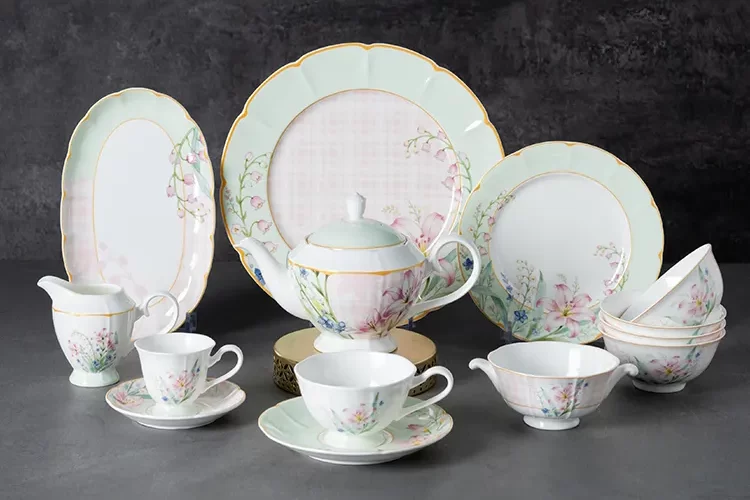
Restaurant dinnerware is the full set that fills one cover. A standard cover for a hotel might be a dinner plate, a side plate, a bowl, and a cup. Our porcelain crockery for restaurants guide covers how hotels buy these in bulk. Banquet service often drops the cup and adds a larger rim plate. Build the cover first as a single set, then scale it by seat count. That keeps storeroom counts clean and reordering simple.
Ceramic Plates and Bowls: Material Choices
Ceramic plates and bowls span a few material families, and the choice drives both feel and life span.
Fine china: Part of the bone china family but made without bone ash. A solid, lighter cost option for daily service. Fine porcelain: A high fire body that is dense and chip resistant. Our Royal Porcelain line is the harder variant built for constant use. Fine bone china: The version with bone ash added. Best for premium or branded service.
Pick by service level, not by trend. A cafe can run fine porcelain all day; a flagship dining room may add fine bone china as the accent.
Shape, Glaze, and Decal: Your Brand on the Table
The pieces you pick do more than hold food. Shape frames the plating, glaze sets the mood under dining room light, and decal carries your name. We develop all three with you, not from a fixed catalog. A rim plate with your border, a glaze matched to your brand color, or a logo on the saucer turns a standard cover into a set guests remember
Build a Cover Set
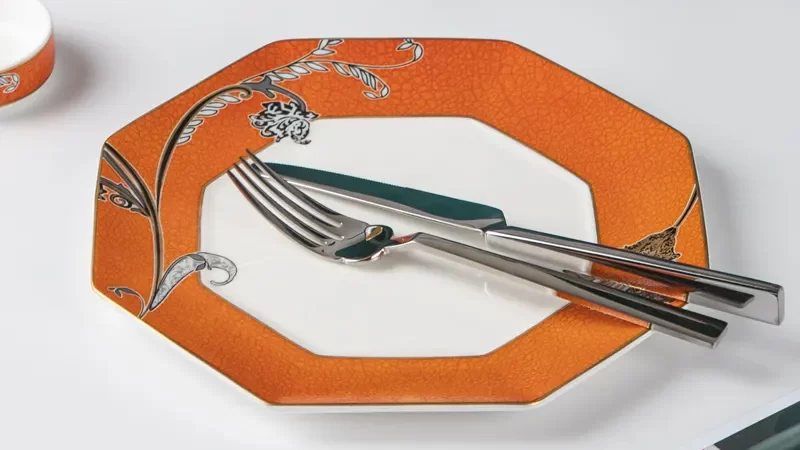
These restaurant dinnerware pieces form the base of every cover, so choose the mix before you scale by seats. For the full procurement plan, see our food service dinnerware guide.
| Cover type | Pieces | Material pick | Use case |
|---|---|---|---|
| Cafe cover | Cup, small plate | Fine porcelain | Fast, light service |
| Hotel cover | Dinner plate, side, bowl | Royal Porcelain | Uniform daily service |
| Banquet cover | Rim plate, bowl | Vitrified porcelain | Large plated courses |
| Premium cover | Fine bone china accent | Fine bone china | Branded fine dining |
Mix rule: Keep one base white, then add at most one accent piece. Par level: Hold three days of covers in stock to absorb a busy weekend.
Steps to Build Your Set
- Write down your menu and your seat count, then list the restaurant dinnerware each cover needs.
- Choose a base material that fits your service level.
- Pick plate sizes for each course.
- Ask for samples and run a service test.
- Set par levels and place the opening order.
Reading the Spec Before You Build
Before you lock a cover set, read the spec on each piece.
Start with the body type, because fine porcelain, fine china, and fine bone china each behave differently under washing and stacking. Then check the rim style. A rolled rim hides small chips better than a sharp edge, which matters in a busy pass station.
Ask for the weight of each piece, since a heavy bowl slows a server during a rush. Confirm the glaze is food safe, and look for a supplier that runs under ISO 9001 quality management.
Keep one sample of each piece on the shelf so new orders match the set you approved. A clear spec also helps when you add a second site, because the look stays the same across locations, and your reorders stay clean.
A hotel opening is not a one-time purchase. It is a project that runs from concept to replenishment, and we work as your Hospitality Tableware Solution Partner through every step, so the cover set you open with is the set you can reorder for years.
- Concept / Menu Analysis — We start from your menu and service style (fine dining, banquet, buffet, or cafe). The dishes you plate decide the sizes and shapes you need, not a catalog number.
- Material & Shape Selection — We help pick the body (fine porcelain, Royal Porcelain, or a fine bone china accent) and the rim, coupe, or bowl form that fits your volume and brand.
- Custom Design — Our in-house design team develops the shape, glaze, and decal that carry your brand identity, from a single logo to a full custom cover set.
- Sampling — You receive physical samples to run a real service test, not just a desk review.
- Operational Testing — We check how pieces stack, carry, and survive a busy pass, then adjust before mass production.
- Production / QC — Made in our own factory under ISO 9001 quality management, with QC at each stage so body and glaze stay consistent run to run.
- Delivery — Coordinated to your seat count and opening date, with par-level planning so your storeroom stays full.
- Replenishment — Reorder against the approved sample, supported by agents in multiple countries for fast local restocking.
Tip: Test the set during a real service, not on a desk. How it stacks and carries matters more than how it photographs.
Frequently Asked Questions
Q: What are the basic restaurant dinnerware pieces for a new opening?
Start with a dinner plate, a side plate, a soup bowl, and a cup. That four piece base covers most menus, and you can add platters later as volume grows.
Q: Are restaurant plates and ceramic plates and bowls the same thing?
They overlap. Restaurant plates are the sizes built for service, while ceramic plates and bowls is the broader material name. Both sit under restaurant dinnerware, the full set a dining room runs on.
Q: Which material lasts longest in a restaurant?
Fine porcelain and our Royal Porcelain line last longest under daily washing. Fine bone china is the premium accent body, but it suits lower volume, branded service rather than constant stacking.
Yes. We build cover sets to your menu and brand, from a single base white to a custom decal across the full set.
Ready to build your cover set? Send us your project type (new opening, renovation, or expansion), your service concept (fine dining, banquet, buffet, or cafe), your expected quantity by cover or seat, and your customization requirement (shape, glaze, decal, or brand color). Contact P&T Royal Ware and we will return samples and a plan matched to your site.


LET'S TALK TOGETHER
Lorem ipsum dolor sit amet, consectetur estor adipi isicing elit, sed do eiusmod tempor este uterre incididui unt ut
