


PITO Article
Fine China Tea Cups for Hotels: Sourcing Cup-and-Saucer Sets That Last
A tea cup in a hotel does more than look elegant. Guests pick it up at breakfast. They hold it in the lobby lounge. They notice it during afternoon tea. So the cup has to feel balanced in the hand, match its saucer and pot, fit the service tray, survive repeated washing, and still be reorderable years later when one breaks.
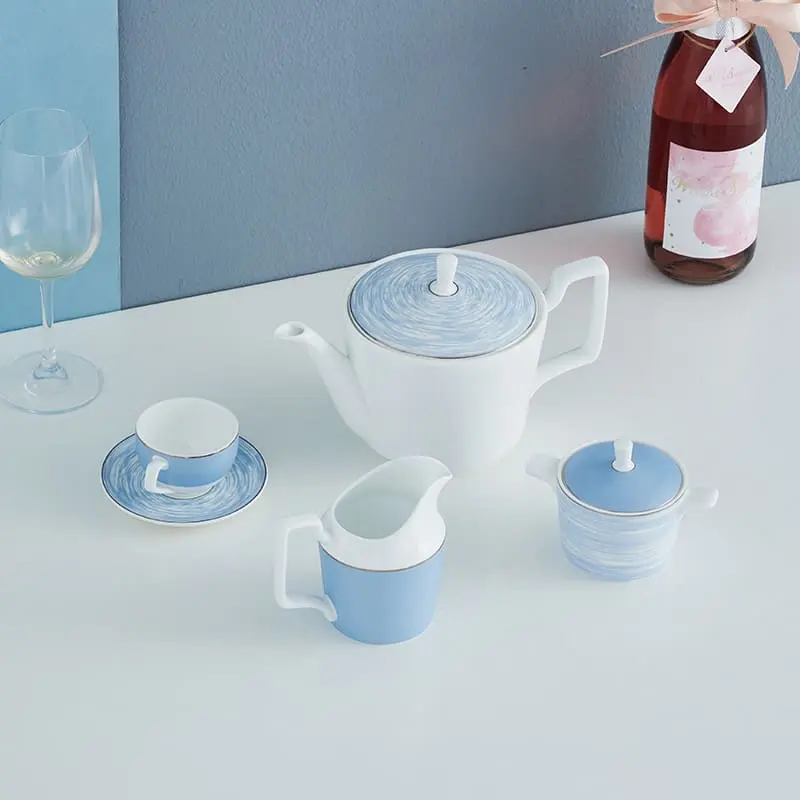
For hotel procurement teams, importers, and distributors, tea cups are a small item with a large brand impact. Guests may not recall the carpet, but they will remember a cup that felt cheap or rattled against its saucer. P&T Royal Ware helps B2B buyers source fine china, fine bone china, fine porcelain, and coordinated cup-and-saucer programs for exactly these hotel use cases.
Key Takeaways for Hotel Tea Cup Buying
- Specify the whole tea service, not just the cup. Saucer fit, spoon rest, pot compatibility, tray stability, and storage all matter.
- Review fine china tea cups by product line. Ask for material, finish, decoration method, care guidance, and sample testing details for the exact item.
- Fine bone china can feel lighter and more premium because it contains real bone ash; fine china sits in the same bone china family but without bone ash. Confirm the product spec instead of trusting the material name alone.
- Plan replacement SKUs and reorder continuity before you approve a custom decoration.
- Test samples in real service scenes: pouring, carrying, stacking, washing, guest handling.
What “Fine China Tea Cups” Means in B2B Sourcing
In a shop, “fine china” often just means “elegant tableware for home.” In B2B sourcing, that label isn’t enough. A hotel buyer needs specifics: the material family, body color, cup capacity, wall feel, glaze, saucer pairing, decoration method, carton packing, and whether the line can be reordered.
So when a supplier shows you tea cups labeled “fine china,” ask direct questions — and watch the two easy-to-confuse terms. Fine china is a bone china body made without bone ash, while fine bone china is the version that contains real bone ash and usually feels lighter and more translucent. Both belong to the bone china family, but P&T Royal Ware now names them separately so a buyer is never unsure which they are getting. Also confirm whether the body is fine porcelain — the industry term for high-temperature porcelain — or another ceramic. Does the cup come with a matching saucer? Can it be used with your existing tea pots, service trays, and dishwashing process? Those answers matter more than the label.
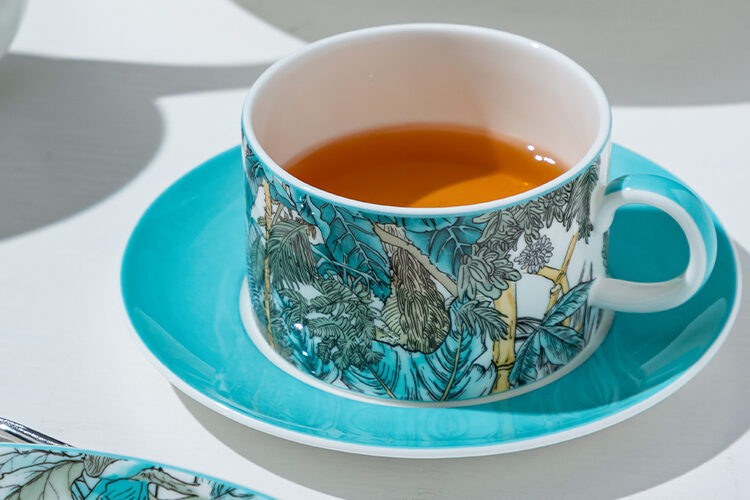
P&T Royal Ware offers fine china and fine bone china tableware categories and wider programs for hotel and restaurant buyers. Pick the right tea cup line by use case, not by catalog category alone.
Where Hotels Use Tea Cups
Tea cup needs change by hotel department. One property may need several cup styles; another can standardize on one main cup-and-saucer set. Map the use first, then the cup.
| Hotel area | Buyer priority | Practical check |
| Guestroom tea service | Compact storage, guest handling, replacement ease | Cup size, saucer footprint, tray fit |
| Breakfast restaurant | High daily use, fast clearing, dishwasher flow | Stackability, weight, simple reorder |
| Lobby lounge | Premium look and brand impression | Shape, whiteness, decoration, saucer detail |
| Afternoon tea | Coordinated presentation | Cup, saucer, tea pot, dessert plate matching |
| Banquet and meeting rooms | Volume service and consistent setup | Carton planning, SKU count, replacement stock |
| VIP or executive lounge | Refined feel with controlled quantities | Material, decoration, hand feel, presentation |
This mapping stops you from overbuying a decorative cup that only works in photos. It also shows where a fine bone china tea set is worth the cost — and where a simpler porcelain line is the better choice.
Cup Shape, Capacity, and Hand Feel
The cup shape should support the drink and the service motion. A hotel serving English breakfast tea may want a different cup feel than one focused on Chinese tea, herbal infusions, or afternoon tea sets. And don’t guess capacity from the product name — confirm it in the supplier’s spec for the exact cup.
Here are the shape questions that matter most:
- Is the rim comfortable to drink from?
- Does the handle fit the guest’s hand and the way staff carry it?
- Does the cup feel balanced when full?
- Does it sit securely on the saucer?
- Does it fit your tea pot, tray, and service cart?
- Does the shape allow easy washing and drying?
For hotel buyers, the saucer is not an afterthought. It affects spills, spoon placement, table setting, tray movement, and guest perception. A beautiful cup with a poorly matched saucer creates a small problem that appears every day.
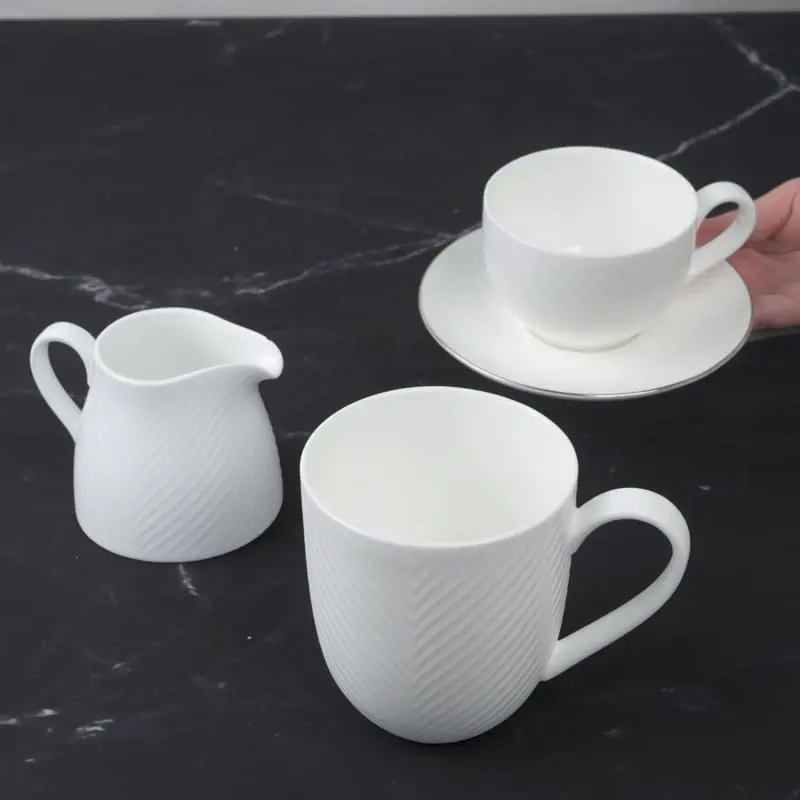
Saucer Design and Cup-and-Saucer Fit
A good cup-and-saucer set should feel intentional. The cup foot should sit securely in the saucer well, and the saucer should leave room for a spoon, sugar packet, or small garnish if the service needs it.
When you review samples, tilt the saucer gently with the cup in place. This is not a formal test, but it shows how the set behaves on a moving tray. Also check whether the saucer’s rim, well, and foot ring stack stably.
If you want a logo, check where it lands. A logo inside the cup may look premium but gets harder to approve if the design changes. A logo on the saucer or outer wall may be easier to show, depending on service style. Confirm the decoration method and durability with the supplier for the selected line.
Fine China, Fine Bone China, Fine Porcelain, or Royal White Porcelain?
Match the material to brand positioning, budget, and service pressure. There is no single best material for every hotel tea service. Before comparing, separate the three material families P&T Royal Ware works with, then read the fit table below:
| Material direction | When it can fit | What to confirm |
| Fine china (bone china, no bone ash) | Premium look at a lower cost; broad hotel and banquet use | Body color, glaze, cup weight, saucer pairing, reorder continuity |
| Fine bone china (bone china, with real bone ash) | Executive lounges, VIP service, afternoon tea where a light, translucent, refined feel matters | Bone ash content, translucency, decoration method, care guidance |
| Fine porcelain (high-temperature porcelain; Royal Porcelain is the more durable variant) | Broad restaurant and banquet use; high daily volume and dishwasher flow | Body color, glaze, cup weight, saucer pairing, reorder continuity |
| Royal white porcelain | Clean white coordinated brand presentation | Available cup shapes, matching plates, saucers, and accessories |
Fine bone china contains real bone ash, which is why it can read as more refined, lighter, and more translucent than fine china (which has no bone ash). Fine porcelain, by contrast, is high-temperature porcelain: durable for daily restaurant and banquet use, and our Royal Porcelain (皇家瓷) variant is an even more durable fine porcelain developed in-house. Don’t accept fixed bone ash percentages, firing temperatures, or dishwasher claims unless they are documented for the exact product line. Treat every technical point as product-line evidence, not a universal promise.
For buyers comparing mugs and tea cups, the logic differs. The existing fine bone china mugs guide for hotels covers mugs, while this article focuses on tea cups, saucers, and hotel tea service sets.
Decoration and Brand Identity
Tea cups often carry a hotel’s brand identity. A logo, rim line, decal, color band, or custom pattern can make the guest experience feel more deliberate. But decoration also affects approval time, cost, care guidance, and reorder control.
Before you approve a decorated fine bone china tea service, ask:
- Which decoration method is used for the cup and saucer?
- Are there usage restrictions for metallic details?
- Can the design be repeated in future runs within an acceptable tolerance?
- Will the same design be available on matching tea pots, dessert plates, or accessories?
- What artwork file format and approval sample are required?
For chain hotels and distributors, a simple decoration system is usually easier to manage than a complex pattern on every piece. Put the stronger design detail where guests notice it most, and keep high-volume backup items practical.
How to Build a Hotel Tea Service Specification
A strong RFQ saves time for both you and the supplier. It also lowers the risk of receiving samples that look attractive but don’t fit your operation.
Include these points in the specification:
- Target market and hotel segment.
- Use area: guestroom, restaurant, lounge, banquet, or retail gift set.
- Cup capacity required by the beverage program.
- Material preference: fine china (no bone ash), fine bone china (with bone ash), fine porcelain — including our Royal Porcelain / 皇家瓷 variant — or royal white porcelain.
- Whether you need a cup only, cup and saucer, or full fine bone china tea set.
- Matching items: tea pot, sugar bowl, creamer, dessert plate, or service tray.
- Decoration requirement: plain white, logo, decal, color rim, or custom pattern.
- Expected order quantity and reorder plan.
- Required product documentation for the target market.
- Packaging requirements for hotel use, distributor stock, or retail-style presentation.
For wider hotel tableware sourcing, buyers can review the hotel tableware page and the full P&T Royal Ware product range.
Sample Review Checklist
Review samples with both procurement and operations when you can. A cup that looks right to a buyer may feel wrong to service staff, and a cup that works operationally may still miss the brand standard.
Use this checklist:
| Check area | What to look for |
| Hand feel | Balance, rim comfort, handle comfort, weight |
| Cup and saucer fit | Stability, saucer well, spoon room, tray behavior |
| Beverage fit | Capacity, heat handling expectations, pouring experience |
| Visual match | Whiteness, glaze, decoration position, logo scale |
| Washing and storage | Stack behavior, rack fit, drying, foot ring contact |
| Reorder logic | SKU naming, matching pieces, replacement availability |
| Documentation | Material, care guidance, applicable test documents for the target market |
If you’re sourcing for several properties, test the cup in the toughest service scenario first. A cup that survives banquet volume will likely also work in lower-volume guestroom service — but the reverse isn’t always true.
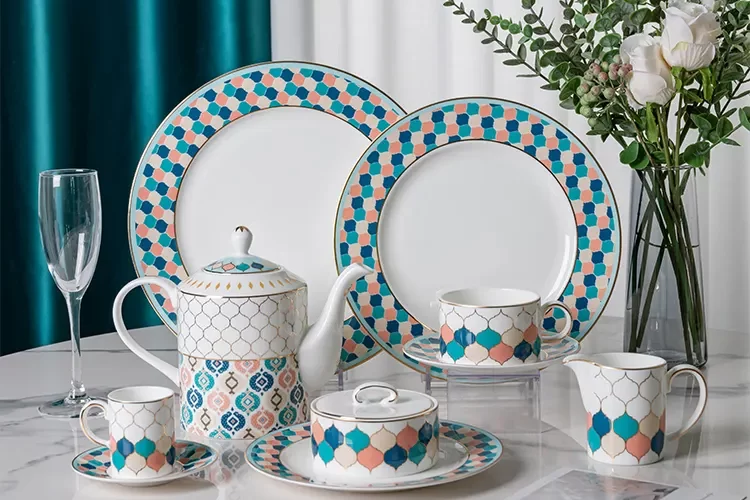
Common Sourcing Mistakes
The first mistake is treating tea cups as a purely decorative purchase. In hotels, the cup moves through storage, service, washing, and replacement cycles. Review operational fit with the same seriousness as appearance.
The second mistake is buying a cup without confirming saucer compatibility. If the cup and saucer weren’t designed as a set, tray movement and guest handling feel awkward.
The third mistake is approving custom decoration without a replacement plan. A hotel may love the first delivery, but future replacements get hard if artwork files, color tolerance, or minimum order requirements aren’t clear.
The fourth mistake is assuming all “fine china” performs the same. Remember that fine china contains no bone ash while fine bone china does — same family name, different body — and fine porcelain is a separate high-temperature material altogether. Material names are only a starting point. The final decision should rest on the product line, supplier documentation, sample review, and intended use.
P&T Royal Ware can support hotel buyers, importers, and distributors with cup-and-saucer sourcing, coordinated tea service pieces, and OEM/ODM decoration projects. For a faster quotation, send the desired cup style, saucer requirement, material preference, logo or pattern notes, target market, quantity range, and whether matching tea pots or dessert plates are needed.
If the project is still early, start by browsing the fine china and fine bone china categories or the full product catalog.
FAQs About Fine China Tea Cups
Are fine china tea cups suitable for hotels?
Yes, when the selected product line fits the hotel’s service style, washing process, decoration needs, and replacement plan. Review samples before bulk orders.
What is the difference between a mug and a tea cup for hotel sourcing?
A mug is often used for larger hot beverages and may not need a saucer. A tea cup is usually part of a more formal tea service with a matching saucer. Source them as separate use cases.
Should hotels choose bone china tea cups?
Hotels may choose fine bone china tea cups for premium service areas where a refined, light, translucent feel matters, or fine china (without bone ash) where a clean white look at a lower cost fits better. Confirm the exact product specifications, care guidance, and sample performance before approval.
What should be included in a fine bone china tea set?
A fine bone china tea set may include cups, saucers, tea pot, sugar bowl, creamer, and matching dessert plates. The exact set should follow the hotel’s menu, service style, and storage plan.
Conclusion
Source fine china tea cups as part of a complete service system. Cup shape, saucer fit, material, decoration, washing flow, storage, and reorder continuity all affect the guest experience and your long-term cost.
P&T Royal Ware can help hotel and distributor buyers compare material options, develop cup-and-saucer sets, and prepare samples for practical service review. The best tea cup purchase is one that looks elegant, works smoothly, and can be replaced without confusion.


LET'S TALK TOGETHER
Lorem ipsum dolor sit amet, consectetur estor adipi isicing elit, sed do eiusmod tempor este uterre incididui unt ut
