




PITO Article
Why Restaurant Rebranding Should Include Tableware Upgrades
A restaurant rebrand changes the logo, interior, menu, pricing, and service style. The plate is the one item the guest holds. If the tabletop stays the same, guests feel the gap the moment food arrives.
Tableware belongs in the rebrand plan, not in a follow-up purchase. This guide covers when to trigger a tableware review, how to audit current stock, how to match new items to the concept, how to choose between full replacement and phasing, how to test samples, and how to plan replacements with a custom tableware manufacturer.
When a Rebrand Should Trigger a Tableware Review
Not every menu change needs new plates. These five situations do.
The Restaurant Moves Upmarket
When the average check rises or the service moves from casual to fine dining, old tableware works against the new price point. Guests paying more expect plates that feel considered. Heavy, worn, or generic plates make the upgrade feel unfinished.
Fine dining and premium hotel concepts move to bone china or refined porcelain. Buyers should request samples, check weight and rim detail, and test items in service before committing.
The Menu Direction Changes
A new plating philosophy changes the geometry the kitchen needs. A rustic stew needs depth. A modern sauce-driven dish needs a wide flat surface. A tasting menu needs smaller plates with controlled negative space. A sharing menu needs broad platters.
If the new menu cannot be plated well on the current shapes, the shapes need to change.
The Interior Style Changes
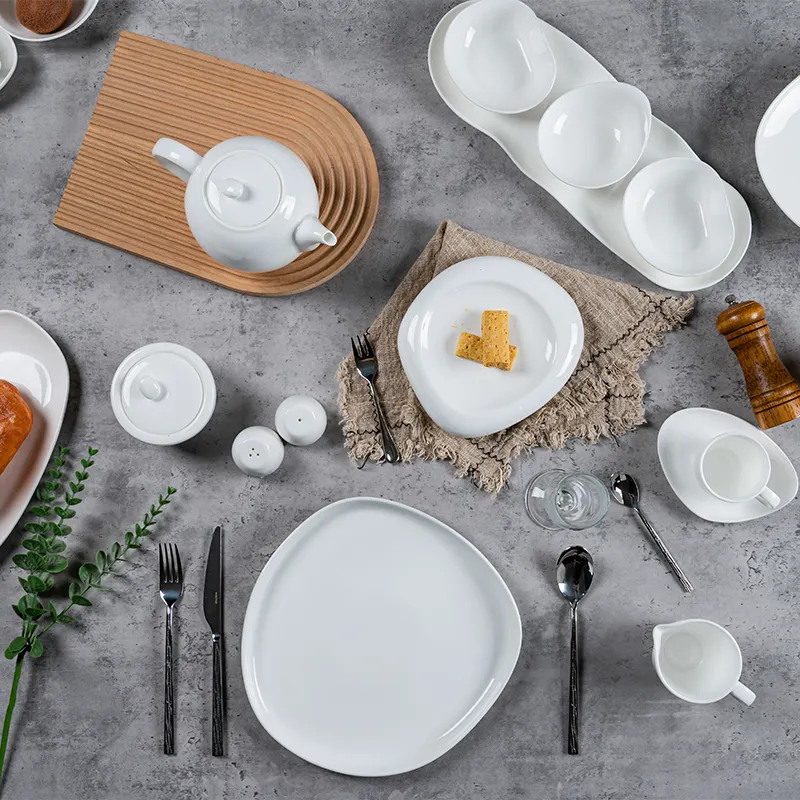
The plate is the closest object to the guest on the table. It has to sit with the lighting, linen, glassware, and furniture. Warm lighting changes how a cool white glaze reads. Matte finishes absorb light. Glossy finishes reflect it. Test samples inside the finished room, not in a showroom.
Photo and Social Media Presentation Matters
Guests photograph food before they eat it. Plates that glare under LED lighting, clash with ingredient colors, or look busy behind the food produce weak photos. A plate that supports contrast and clean composition helps the dish carry online.
The Brand Expands to Multiple Locations
A rebrand marks the start of multi-unit growth for many operators. This is the point to lock specifications, reduce SKUs, and centralize supply. Rolling the same collection into every outlet keeps the brand experience consistent and simplifies purchasing.
What Old Tableware Does to a New Concept
Keeping the old collection after a rebrand creates problems that show up in service, not in the brand book.
- Brand disconnect. Guests see the new interior and the old plate in the same view. The rebrand reads as surface decoration.
- Portion distortion. Oversized plates make small premium portions look sparse. Small plates make generous casual portions look cramped.
- Wear shows faster. Scratched glaze, knife marks, and micro-chips look worse under upgraded lighting. Old plates that survived the old room may not survive the new one.
- Service drag. Heavy or awkward items slow clearing and resetting. Staff fatigue goes up, table turnover goes down.
- Replacement chaos. Discontinued lines push managers to buy substitutes. Within months the tabletop is mismatched again.
- Hygiene signals. Crazing glaze and chipped rims read as poor cleanliness, even when the kitchen is clean.
Audit Current Tableware Before Specifying New Items
Do not start with catalogs. Start with what the restaurant uses today.
- Item list. Record every plate, bowl, cup, saucer, and platter in circulation, with item code, size, and quantity.
- Distribution. Map items to stations: main dining, bar, patio, private dining, room service.
- Condition. Grade items as good, worn, or retired. Track glaze scratching, rim chipping, and metal marking.
- Breakage history. Identify which items break most. The pattern points to weak shapes, poor clay, or bad handling.
- Menu fit. Flag items that cannot plate the new menu.
- Storage fit. Check whether current items fit the shelves, racks, and dishwashers the new operation will use.
- Brand alignment. Score each item against the new concept. Low scores retire.
The audit gives purchasing the data to decide what stays, what retires, and what the new collection must replace.
Match New Tableware to the Rebrand Strategy
Match Brand Positioning
- Fine dining. Refined profiles, lighter weight, controlled rim detail. Bone china or fine white porcelain.
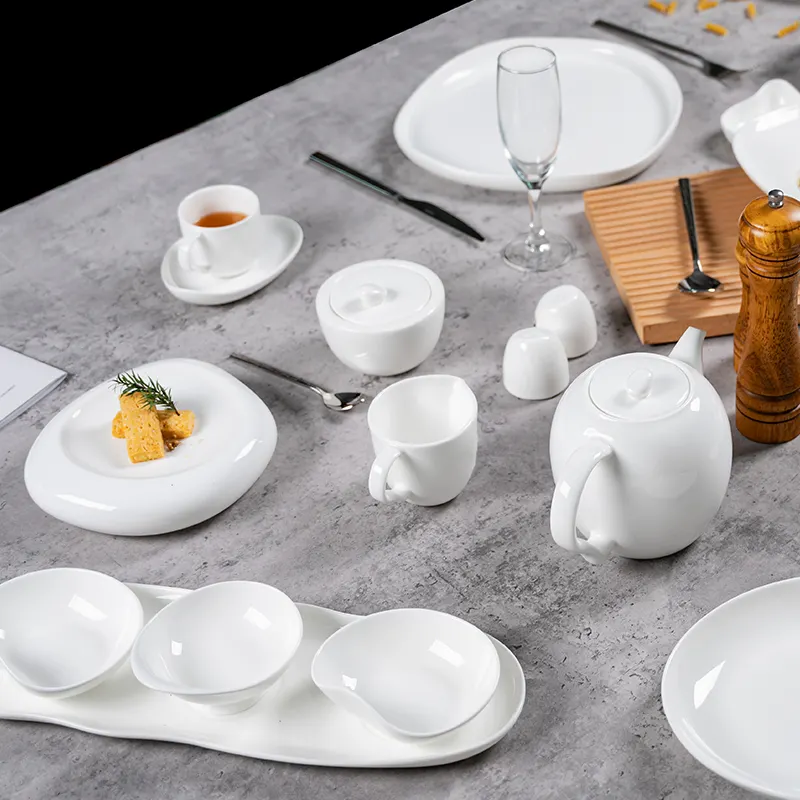
- Modern bistro. Clean coupe plates, subtle texture, durable porcelain.
- Casual and high-volume. Reinforced vitrified porcelain, rolled edges, practical stackability.
- Boutique concept. Selective color glaze, embossed texture, or custom pattern used as a signature.
- Hotel restaurant relaunch. A coordinated collection that works across all-day dining, lounge, and room service.
Match the New Menu
Engineer the plate to the dish.
- Main course plates. Rim width for sauce control, center depth for heat retention.
- Appetizer and salad plates. Surface that holds dressings without pooling.
- Pasta and broth bowls. Depth and mouth width for garnish and aroma.
- Sharing plates. Broad flat surface for central plating.
- Dessert plates. Slight lip to hold coulis and sauce.
- Cups and saucers. Handle comfort, volume, and saucer room for a spoon.
Match Interior and Service Style
- Lighting. Test glaze color in the actual dining room, under the actual lighting.
- Table size. Smaller tables need narrower rims.
- Service speed. High-turnover venues need lighter items that clear and reset fast.
Full Replacement vs Phased Upgrade
Full Replacement
Best for a major rebrand, a new build, a clear step up in price tier, a new concept, or a hotel relaunch.
- One clean cut. No mixed inventory.
- Strong reopening message.
- Unified staff training and purchasing.
Phased Upgrade
Best for tight budgets, testing custom designs, gradual transitions, or multi-location rollouts.
Risks to manage:
- Old and new items mixed on the same table.
- Delayed brand impact.
- More complex inventory control.
A Practical Phasing Sequence
When a full swap is not possible, phase by visibility and wear.
- Guest-facing plates first. Main course, appetizer, dessert. These carry the strongest brand signal.
- Signature and custom pieces next. Tasting, chef’s table, sharing items.
- Beverage and side items. Cups, saucers, side plates.
- Back-of-house and service tools last. Prep and service items the guest never sees.
This sequence puts the budget where guests feel the change first.
Test Samples Under Real Service Conditions
A catalog photo is not approval. A single sample on a desk is not approval.
- Plate the actual menu items.
- Check sauce behavior: spread, pool, bead.
- Check portion appearance against the new price.
- View under dining room lighting.
- Photograph with a phone, the way guests will.
- Run samples through the commercial dishwasher many times. Check for crazing, metal marking, thermal shock.
- Have servers carry full trays. Check weight, balance, and rim heat.
- Fit items into bus tubs, racks, and shelves.
- Collect feedback from the executive chef and the floor manager.
Approve a sample after it survives live service.
Replacement Planning and Cost Control
Calculate Par Stock and Replacement Rate
Par stock is the inventory needed to run service and absorb breakage. For most full-service restaurants, par stock runs two and a half to three times seating capacity. Hotels and banquet operations need higher multiples.
Estimate annual replacement from past breakage data. When historical data is missing, commercial tableware loses three to five percent of service items per month as a planning baseline. Use the real number from the audit where possible.
Replacement budget should cover:
- Initial par stock for the new collection.
- A replacement reserve for the first year.
- Buffer for custom and signature items with longer lead times.
Confirm MOQ, Lead Time, and Reorder Terms
Before signing off, confirm with the manufacturer:
- MOQ per item.
- Lead time for the first bulk order.
- Reorder lead time.
- Mold and artwork ownership.
- Price stability across reorders.
- Discontinuation notice if the item is retired.
Custom items with exclusive molds carry higher MOQs and longer lead times. Plan reorders around those constraints, not around generic stock lead times.
Seal Master Samples
Master samples are the quality benchmark for bulk production.
- Keep one sealed sample per item.
- Have buyer and manufacturer sign and date them.
- Reference them in the purchase contract.
- Use them to resolve disputes if a batch arrives off-spec.
Master samples protect the buyer when the 10,000th plate has to match the approved first article.
Work With a Custom Tableware Manufacturer
Working with a manufacturer instead of a trader gives the buyer control over the specifications that matter in a rebrand.
Shape Library and Custom Development
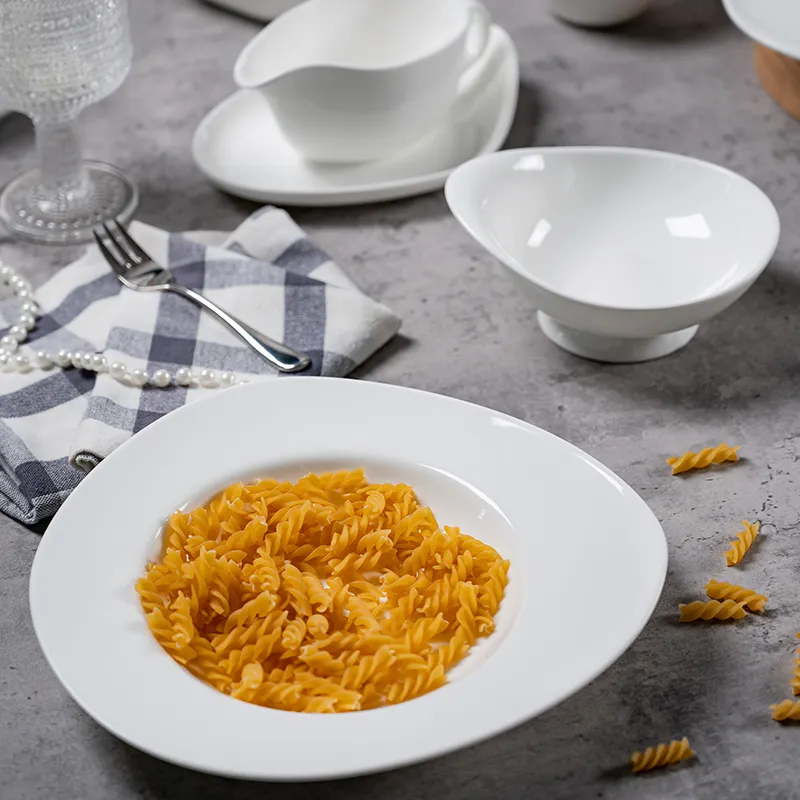
Manufacturers keep proven shape libraries the buyer can adopt, or they develop custom silhouettes exclusive to the brand. For a rebrand, a mixed approach works: standard shapes for core volume items, custom shapes for signature courses.
Logo, Decal, and Color Glaze Customization
- Bottom stamps for brand identity.
- Rim decals and full-wrap patterns.
- Custom color glaze matched to the interior palette.
- Embossed textures and bead edges.
Compliance and Testing
Confirm that glazes are lead- and cadmium-free and meet the target market standards: FDA, LFGB, California Prop 65. Request test reports, not claims.
Batch Consistency and Long-Term Supply
A rebrand holds its look when the supplier can reproduce the same item across reorders for years. Ask the manufacturer how they control kiln temperature curves, glaze batching, and mold wear over time. Secure mold rights and reorder terms so the item does not disappear after the first order.
Conclusion
A rebrand lands at the table. The plate is where the new concept meets the guest. Audit the current collection, match the new items to the concept, test samples in service, and lock the replacement plan before rollout. Tableware treated as part of the rebrand holds the new brand in place for years. Tableware treated as an afterthought pulls it apart within months.


LET'S TALK TOGETHER
Lorem ipsum dolor sit amet, consectetur estor adipi isicing elit, sed do eiusmod tempor este uterre incididui unt ut
