




PITO Article
Porcelain vs. Bone China: Which is Best for Your Business
The selection between porcelain and bone china significantly influences the dining experience in hospitality venues. Upscale hotels and fine-dining establishments frequently favor bone china for its luxurious appearance and lightweight handling characteristics. High-traffic restaurants and catering operations prioritize porcelain for its superior durability and versatility. The appropriate choice of tableware elevates ambiance, demonstrates a commitment to quality, and enhances operational efficiency.
Porcelain vs. Bone China: Key Differences
PITO’s expertise in both porcelain and bone china enables hospitality enterprises to select tableware aligned with their operational requirements and brand positioning. A thorough understanding of the differences between these materials is essential for informed decision-making.
Material Composition
The composition of porcelain and bone china determines their performance characteristics in commercial environments. Porcelain is formulated from feldspar, quartz, and kaolin, whereas bone china incorporates bone ash, which contributes to enhanced strength and translucency. The table below delineates the primary material distinctions relevant to hospitality applications:
| Feature | Porcelain | Bone China |
|---|---|---|
| Composition | Feldspar, quartz, kaolin | Feldspar, quartz, kaolin, bone ash |
| Color | Generally white or off-white | Whiter and more translucent |
| Mechanical Strength | Strong but heavier | Lighter, thinner, and stronger |
| Breakage Rate | Higher breakage rate | Lower breakage rate |
| Cost | More accessible initial cost | Higher initial cost, lower total cost of ownership over time |
The inclusion of bone ash in bone china enhances longevity and reduces breakage incidence, a critical factor in high-volume hospitality operations.
Manufacturing Process
The manufacturing process significantly affects durability and aesthetic properties. Bone china is produced by combining bone ash with porcelain clay, followed by two firing stages at approximately 1320°C and 1280°C. Porcelain undergoes a single firing at temperatures exceeding 1320°C. These distinct processes yield the following characteristics:
- Bone china achieves thin yet robust construction, ideal for upscale environments.
- Porcelain exhibits greater density and impact resistance, suitable for high-traffic settings.
- Bone china’s process imparts elegant translucency, while porcelain provides a natural, opaque finish.
PITO’s advanced production techniques ensure that both materials comply with internationally recognized food-safety standards and retain their appearance through repeated use and cleaning cycles.
Visual and Tactile Qualities
The visual and tactile attributes of tableware directly influence the dining experience. The table below compares these qualities for porcelain and bone china:
| Quality | Porcelain | Bone China |
|---|---|---|
| Translucency | Almost always opaque | Warm, gentle glow when held to light |
| Color | Bright, cool, blue-toned white | Softer, warmer, milky-white or ivory |
| Weight | Heavier and thicker | Lightweight and thin |
| Thickness | Noticeably thicker | Delicate and refined |
| Feel | Solid and robust | Silkier, more delicate touch |
PITO’s porcelain and bone china tableware elevates the visual identity of dining environments. Both materials incorporate non-porous surfaces, smooth glazes, and chip-resistant rims, ensuring sustained cleanliness and durability in commercial applications.
Selection of the appropriate material enhances guest experience and operational efficiency in hospitality venues.
Durability in Business Use
Resistance to Chipping and Breakage
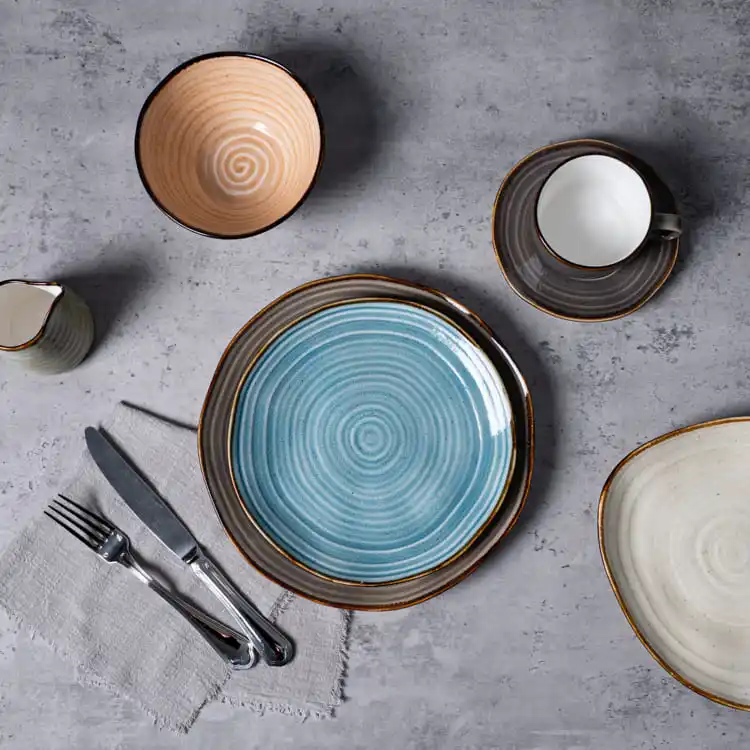
Durability constitutes a primary consideration in hospitality operations. Tableware must endure frequent handling, stacking, and mechanical dishwashing. PITO’s Modern White Porcelain Dinnerware and Bone China White Plate with Gold Rim both demonstrate exceptional performance in these respects.
Transitioning from porcelain to bone china in commercial settings has resulted in a reduction of breakage rates by nearly 40% over an 18-month period. Although bone china entails a higher initial cost per place setting—approximately 60% greater—the investment yields returns through reduced replacement frequency and minimized operational downtime. The incorporation of bone ash in bone china confers exceptional structural integrity while preserving a refined aesthetic.
Performance in High-Traffic Environments
Hotels, restaurants, and catering operations require tableware capable of reliable performance under demanding conditions. The comparison between porcelain and bone china remains a central consideration among hospitality professionals. Both materials offer distinct advantages in high-use contexts.
Key attributes for commercial hospitality applications include:
- Resistance to chipping and scratching, rendering them suitable for high-volume environments.
- Refined appearance that elevates the overall dining experience.
- Versatile design adaptable to diverse culinary styles, ranging from traditional to contemporary.
Bone china distinguishes itself through delicate translucency and warm ivory coloration. Its lighter weight facilitates handling, rendering it particularly suitable for special events and upscale dining. Porcelain, conversely, provides robust structural strength and is well-suited to busy restaurants and large-scale banquets.
Selection of tableware should align with the venue’s operational pace and stylistic positioning. PITO’s porcelain and bone china collections deliver the requisite durability and elegance for demanding hospitality environments.
Appearance and Brand Positioning
Enhancing the Dining Experience
Tableware serves a pivotal function in shaping guest perceptions. The choice between porcelain and bone china influences evaluations of quality and stylistic coherence within hospitality venues. PITO’s collections extend beyond mere functionality to establish the tone for the entire meal. Appropriately selected plates or bowls enhance food presentation, rendering dishes more visually compelling and memorable.
| Aspect | Impact on Dining Experience |
|---|---|
| Food Presentation | Enhances visual appeal and creativity in plating, engaging guests from initial service. |
| Tone and Ambiance | Establishes an immediate impression of quality and sophistication, generating anticipation. |
| Quality Reflection | High-quality tableware signifies a commitment to excellence, supporting premium pricing. |
| Attention to Detail | Immaculate and well-maintained tableware demonstrates meticulous standards, reinforcing guest confidence. |
| Customization | Personalized tableware establishes a distinctive identity, enriching the overall experience. |
PITO’s bone china and porcelain products function as silent brand ambassadors. Their distinctive designs reinforce brand personality and recognition across all dining interactions. Consistent visual presentation through specialized tableware enhances brand recall and amplifies marketing effectiveness.
Aligning with Luxury and Casual Concepts
Appropriate material selection enables enterprises to align tableware with their brand positioning. The table below illustrates how each material supports varied hospitality contexts:
| Material | Luxury Hospitality | Casual Hospitality |
|---|---|---|
| Bone China | Associated with elegance and refined dining | Not typically utilized |
| Porcelain | Not preferred for luxury settings | Practical and reliable for high-traffic use |
Bone china, characterized by delicate translucency and refined finish, elevates luxury dining environments. It conveys exclusivity and supports premium pricing justification. Porcelain provides a robust, practical solution for casual or high-traffic venues, maintaining operational efficiency without compromise to aesthetic standards.
PITO’s customization capabilities ensure that every venue can articulate its unique identity. This combination of operational efficiency and premium positioning enables hospitality enterprises to differentiate effectively in competitive markets.
Tableware selection constitutes a strategic decision that shapes guest perceptions and contributes to sustained brand success.
Cost and Value Considerations in Hospitality
Initial Investment vs. Long-Term Savings
Hospitality enterprises must evaluate both initial expenditure and long-term value when procuring tableware. Porcelain and bone china exhibit a clear distinction in upfront costs. Bone china typically commands a premium of 20–40% over porcelain, attributable to the complexity of bone ash processing, extended firing cycles, and rigorous quality assurance protocols. Porcelain affords a more accessible entry point for operations with constrained budgets or elevated turnover.
- Bone china justifies its premium through luxurious appearance and refined craftsmanship.
- Porcelain delivers cost-effective solutions for large-scale operations and chain hotels.
- Porcelain’s durability results in lower cost-per-use, particularly in high-traffic environments.
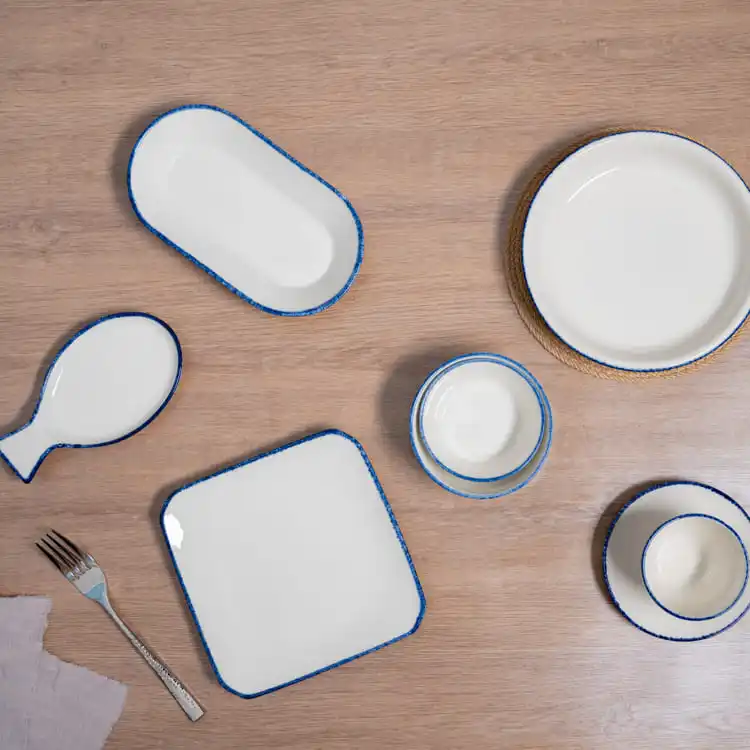
PITO’s Modern White Porcelain Dinnerware provides exceptional value for enterprises seeking reliable performance and elegant presentation. The Bone China White Plate with Gold Rim offers a sophisticated alternative for establishments emphasizing luxury and guest experience.
Investment in premium tableware can enhance brand positioning and reduce replacement frequency, thereby supporting long-term cost efficiencies.
Maintenance and Replacement Costs
Maintenance and replacement expenditures influence the total cost of ownership for hospitality enterprises. The table below compares bone china and professional porcelain in commercial contexts:
| Type of China | Initial Cost Difference | Total Cost of Ownership Over Time |
|---|---|---|
| Bone China | 20%-30% higher | May be higher due to fragility |
| Professional Porcelain | Lower initial cost | Lower TCO due to durability |
Porcelain’s robust construction withstands frequent mechanical washing, stacking, and handling. This resilience results in reduced replacement requirements and lower ongoing expenses. Bone china, while aesthetically superior, may necessitate more careful handling and periodic replacement in high-volume settings.
PITO’s commitment to quality ensures sustained appearance and performance across both porcelain and bone china products. Enterprises benefit from diminished maintenance expenditures and dependable supply continuity, thereby supporting operational efficiency.
Practical Considerations for Operations
Handling and Storage
Hospitality enterprises encounter specific challenges in managing porcelain and bone china tableware. Both materials demand careful handling to minimize breakage, particularly in high-frequency service environments. Staff must execute efficient stacking and transport, yet differences in durability influence breakage incidence. Porcelain’s inherent strength renders it suitable for fast-paced operations. Bone china, while structurally robust and lightweight, benefits from controlled handling to preserve its refined aesthetic.
Key operational considerations include:
- Durability distinctions between porcelain and bone china affect handling protocols.
- Elevated breakage rates increase costs and disrupt service continuity.
- Inventory management becomes complex with overstocking or understocking, particularly across multiple tableware types.
Implementation of proper training and storage solutions—such as padded racks and organized shelving—mitigates damage and streamlines operations.
Cleaning and Maintenance
Efficient cleaning protocols are indispensable in hospitality environments. Both PITO’s porcelain and bone china products feature smooth, non-porous surfaces that resist staining and facilitate cleaning. Commercial dishwashers may be utilized without concern, as both materials tolerate high temperatures and standard detergents. Routine inspection for chips or cracks ensures that only impeccable items are presented to guests.
Establishment of a routine maintenance schedule extends tableware lifespan and preserves professional presentation standards.
Supply and Customization Options
PITO serves as a reliable partner for chain hotels and large-scale venues, providing consistent supply of both porcelain and bone china with assured quality and delivery timelines. Customization capabilities encompass:
- Incorporation of logos to reinforce brand identity.
- Selection of distinctive shapes and patterns aligned with venue concepts.
- Development of personalized dinnerware that enriches guest experience.
Customized tableware supports operational efficiency while generating memorable dining interactions that distinguish the enterprise.
Pros and Cons: Porcelain vs. Bone China for Commercial Applications
Porcelain
Porcelain tableware delivers a comprehensive range of advantages for hospitality enterprises seeking reliability and refined aesthetics. PITO’s Modern White Porcelain Dinnerware exemplifies these attributes, rendering it a preferred option for hotels, restaurants, and catering operations.
| Advantage | Description |
|---|---|
| Aesthetic Appeal | Provides a sophisticated appearance that enhances dining environments and brand positioning. |
| Durability | High-quality porcelain resists scratches and chips, ensuring extended service life in demanding venues. |
| Heat Resistance | Withstands elevated temperatures, supporting microwave and oven applications. |
| Safety | Free from harmful substances and compliant with stringent food-safety standards. |
| Ease of Cleaning | Non-porous surfaces resist stains and are compatible with commercial dishwashing, facilitating efficient operations. |
Porcelain’s robust construction accommodates high-traffic environments. Staff can manage, stack, and clean items with confidence. The material’s thermal shock resistance enables seamless transitions from kitchen to service. Porcelain’s timeless design complements both contemporary and traditional interiors, underscoring a venue’s dedication to quality.
Porcelain tableware is particularly suitable for chain hotels and restaurants prioritizing operational efficiency and consistent presentation.
Bone China
Bone china excels in luxury hospitality contexts. PITO’s Bone China White Plate with Gold Rim illustrates how this material elevates guest experience while addressing practical business requirements.
- Durability and Strength: Incorporation of bone ash enhances structural stability and minimizes chipping during regular service, rendering bone china appropriate for daily operations and special occasions.
- Translucence and Elegance: High translucency improves food presentation, establishing a premium atmosphere in fine-dining settings.
- Heat Retention: Effective heat retention supports optimal temperature maintenance for beverages and dishes in hotel and restaurant applications.
- Lightweight Design: Facilitates ease of carrying and service, benefiting staff during peak periods.
Bone china’s refined appearance conveys exclusivity and meticulous attention to detail. The delicate gold rim on PITO’s plates introduces additional sophistication, rendering each service memorable. Customization options enable venues to strengthen brand identity through distinctive shapes and patterns.
| Benefit | Description |
|---|---|
| Structural Stability | Bone ash reduces chipping and preserves integrity during frequent use. |
| Premium Presentation | Translucency and elegant finish elevate the visual appeal of plated dishes. |
| Service Efficiency | Lightweight construction enables rapid and comfortable service in upscale settings. |
| Heat Management | Effective retention maintains optimal temperatures for food and beverages. |
Bone china represents the preferred selection for luxury hotels and fine-dining restaurants seeking to impress guests and support premium pricing structures.
Porcelain and bone china each offer distinct advantages for hospitality enterprises. Porcelain excels in durability and practicality, whereas bone china provides unparalleled elegance and brand enhancement. PITO’s product lines deliver tailored solutions aligned with diverse business models, ensuring that tableware supports both operational objectives and guest satisfaction.
Decision Guide: Choosing for Your Business
Checklist for Hospitality Buyers
Selection of appropriate tableware for hospitality venues necessitates a systematic evaluation. The following checklist assists procurement professionals in assessing options and arriving at informed decisions:
- Test tableware compatibility with actual menu items to verify suitability for food presentation.
- Confirm compatibility with commercial dishwashing systems.
- Verify that weight per place setting does not exceed 2.1 kg to facilitate handling.
- Identify the primary guest demographic, such as business travelers or leisure guests.
- Ensure tableware alignment with the venue’s narrative and brand identity.
- Evaluate costs in relation to long-term value rather than initial expenditure alone.
- Map the top three event types by volume to determine essential tableware requirements.
- Develop a core inventory covering daily operations and special events.
- Obtain samples from multiple suppliers and conduct a 72-hour stress evaluation.
- Negotiate tiered pricing structures with suppliers to optimize cost management.
A structured checklist streamlines the selection process and minimizes potential errors.
The table below summarizes critical factors in selecting between porcelain and bone china:
| Factor | Bone China | Porcelain |
|---|---|---|
| Brand Positioning | Luxury hotel or fine-dining restaurant | Casual dining, catering, or everyday service |
| Budget & Replacement Costs | Higher initial investment | Cost-effective replacements for large-scale use |
| Guest Experience | Creates a premium, memorable impression | Delivers reliability and practicality |
| Operational Needs | Suits smaller, controlled service environments | Thrives in high-volume, fast-paced operations |
PITO’s product portfolio, encompassing the Bone China White Plate with Gold Rim and Modern White Porcelain Dinnerware, addresses these considerations through customizable, durable, and visually refined solutions across hospitality segments.
Selection between porcelain and bone china hinges on specific business objectives and service characteristics. Bone china provides chip resistance and elegance, rendering it optimal for luxury venues. Porcelain delivers cost efficiency and durability, ideal for high-volume operations.
- Consider material quality, design, and sustainability.
- Align tableware with brand color palettes and guest expectations.
- Balance budgetary constraints with long-term value.
| Feature | Benefit |
|---|---|
| Customizable options | Reinforce brand identity and enhance guest experience |
| Durability and safety | Reduce replacement costs and ensure food safety |
Consultation with PITO provides access to tailored, high-quality solutions from a trusted industry partner.


LET'S TALK TOGETHER
Lorem ipsum dolor sit amet, consectetur estor adipi isicing elit, sed do eiusmod tempor este uterre incididui unt ut
