




PITO Article
Bone China Outpaces the Tableware Market as Hospitality Rebound Fuels Premium Demand
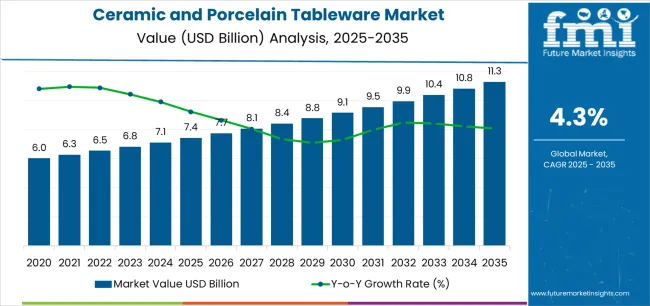
The global tableware industry just received a data-backed vote of confidence. According to market analysis published by Future Market Insights (FMI) on 20 October 2025, the ceramic and porcelain tableware market is estimated at USD 7.4 billion in 2025 and projected to reach USD 11.3 billion by 2035, growing at a CAGR of 4.3% over the forecast period. FMI’s historical view is even stronger: the market expanded at a 6.1% CAGR between 2020 and 2025.
The figures are not a single-source claim. A separate 2026 assessment by Persistence Market Research puts the category at USD 7.6 billion in 2026, heading to USD 10.3 billion by 2033 at a 4.5% CAGR — a near-identical trajectory that confirms the uptrend is real.
Why Bone China Is the Segment to Watch
While porcelain leads the broader material mix — FMI places it at roughly 38% of the material category, with Persistence Market Research citing 44% in 2026 — the standout is bone china. FMI lists the bone china segment at a 4.3% CAGR, but dedicated bone china studies tell a sharper story: Market Reports World and Industry Research Biz both project the bone china market at a 5.89% CAGR through 2035, while PW Consulting estimates 5.45% — consistently above the blended market rate.
The reason is structural. Bone china earns its premium position from bone ash, the ingredient that gives it translucency, high whiteness, and chip resistance that standard porcelain cannot match. Industry analyses consistently describe typical fine bone china as containing 30%–45% bone ash, fired at 1,200–1,250°C. That material science — lightness, durability, and a luminous surface — is precisely what higher-end buyers are now willing to pay for, and it explains why bone china commands a premium even as the broader category grows only modestly.
Hospitality Is Doing the Heavy Lifting
The demand is not coming from home kitchens alone. Across independent sources, commercial and HORECA (Hotels, Restaurants, Catering, Banquet, Buffet) channels account for roughly 58% of bone china consumption. More than 60% of premium hotels in developed markets use bone china for banquet and restaurant service, drawn by its light structure and resistance to chipping through repeated commercial dishwashing cycles.
That procurement pattern is reshaping how manufacturers think about product design. Hotels, airlines, and luxury restaurants prioritize durability, chip resistance, and efficient logistics over design exclusivity — criteria that favor a high-bone-ash, kiln-dense body built for the rigors of daily service rather than the display cabinet. As travel and dining rebound, the replacement and expansion cycles at hotels and resorts are feeding the segment directly.
Sustainability and Customization Are Reshaping Procurement
The FMI report flags sustainable living as a core driver, and the segment is responding. Roughly 71% of consumers prioritize food-safe tableware materials, pushing manufacturers toward lead-free and cadmium-free production. Digital decoration, minimalist collections, and customized designs are no longer niceties — they are procurement requirements for design-conscious hospitality groups.
For suppliers, this means the winning formula is increasingly a certifiable, food-safe body that can also carry a client’s own pattern and logo. The brands that thrive will be those able to combine compliant materials with flexible customization at commercial scale, rather than competing purely on unit price.
What the Regional Split Tells Buyers
Geography reinforces the trend. FMI’s country-level CAGRs run United States 4.8%, United Kingdom 5.7%, China 4.9%, Japan 6.1%, and South Korea 6.4% — with Asia Pacific, North America, and Europe named as key growth regions. Independent bone china research confirms Asia Pacific as the largest and fastest-growing region (≈46%–47% of global demand in 2025), anchored by established manufacturing hubs and a vast regional hospitality base.
For international buyers, the implication is practical: sourcing from an Asia-Pacific bone china manufacturer with export certifications shortens both lead time and compliance risk — while capturing the cost efficiencies that make imported premium ceramic sets supply nearly half of some markets.
The Outlook for 2026 and Beyond
The signal from the data is consistent: the tableware market is growing modestly overall, but bone china is the premium engine, lifted by hospitality recovery, premiumization, and sustainability mandates. For hotel groups, restaurant chains, and distributors, the buying calculus is shifting toward durable, certified, customizable bone china that survives commercial dishwashing and meets food-safety standards across regions. Analysts expect the gap between bone china’s ~5.5–5.9% growth and the category’s ~4.3–4.5% blended rate to persist through the forecast window.
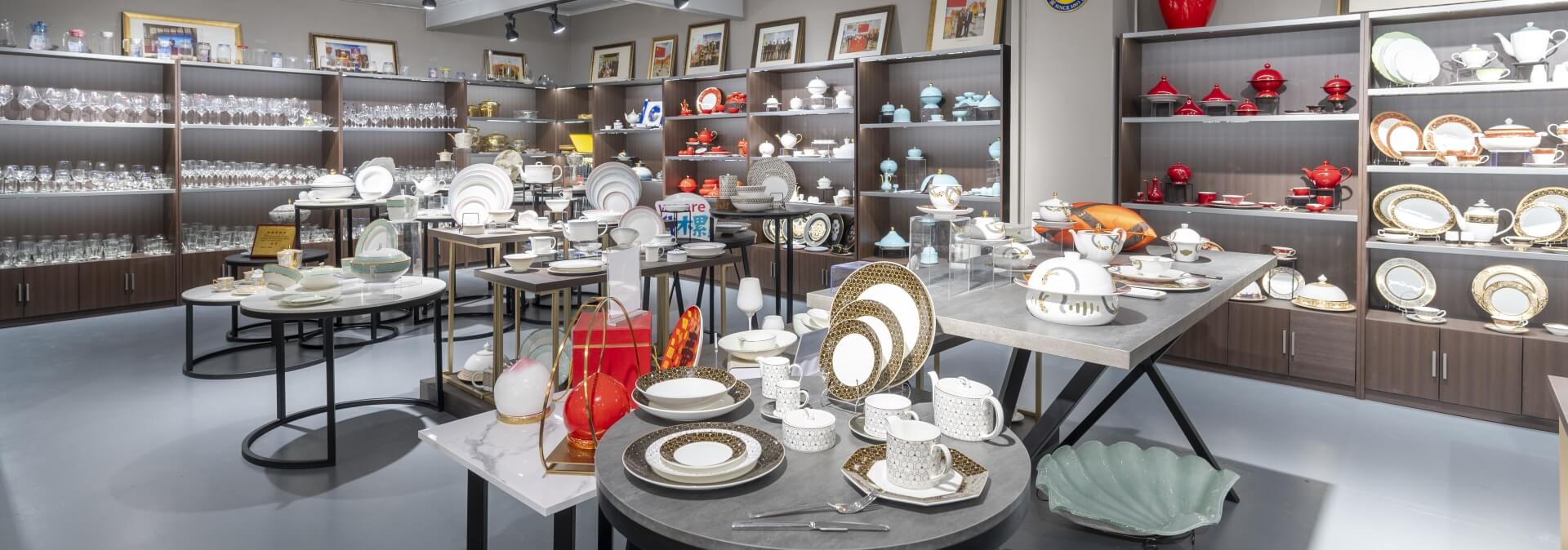
The report’s conclusions mirror what P&T Royal Ware — the hospitality tableware brand of Guangdong P&T Porcelain Co., Ltd. — observes in its own B2B pipeline. The company specializes in three major materials — bone china, fine porcelain, and royal white porcelain — and reads the bone china upswing as validation of a strategy already in motion.
P&T Royal Ware produces bone china with 52% bone ash — above the typical 30%–45% industry band — fired at 1,320°C for high density and low porosity. The result is the lightweight, chip-resistant, restaurant-grade body that the market’s fastest-growing buyers are asking for, backed by certifications spanning CE, EU, FDA, LFGB, SABER, BSCI, AEO, and ISO 9001, with custom design, logo, and individual packaging programs and a 500-piece minimum order for volume and bespoke work. With a catalog of over 10,000 designs and a one-stop hospitality solution spanning tableware, glassware, and cutlery, the brand is positioned for exactly the demand the analysts are now quantifying. Learn more about the company and its hospitality heritage, or contact the team for a tailored quotation.


LET'S TALK TOGETHER
Lorem ipsum dolor sit amet, consectetur estor adipi isicing elit, sed do eiusmod tempor este uterre incididui unt ut
