




PITO Article
Bone China vs. Porcelain: The Guide Every Hotel and Restaurant Needs
Look beyond the price on the menu. The real power to command a premium might just be at your customer’s fingertips.
Imagine this: you’ve perfected every detail of your restaurant. The lighting, the music, the ambiance—it’s all flawless. Your chef’s signature Tomahawk steak arrives, sizzling and aromatic. But in that decisive moment, as your guest picks up their knife and fork, their first touch is a heavy, clumsy plate with a few scratches along the edge.
In that instant, didn’t all your hard work just get discounted, even if just a little?
We talk endlessly about the guest experience, yet often overlook the one object our customers have the most intimate and prolonged contact with: the tableware. It’s not just a vessel; it’s a strategic decision that impacts cost, brand, and profit. It silently defines your restaurant’s standing in the customer’s mind and determines what they’re willing to pay.
Today, let’s dive into the two leading choices in the industry—Bone China and Fine Porcelain—and run the numbers that many operators get wrong.
Round 1: The Illusion of Cost—Don’t Be Fooled by the Unit Price
It’s easy to fall into the unit price trap. But as any seasoned operator will tell you, the real metric is TCO (Total Cost of Ownership).
Yes, bone china typically has a purchase price 20%-30% higher than professional-grade porcelain of a similar tier. Seeing that on a quote, many instinctively choose the latter. But this is often a shortcut to higher operational costs down the line.
- Fine Porcelain: We’re not talking about your everyday home dinnerware. This is professional-grade porcelain, engineered for the battlefield of a commercial kitchen. It’s “vitrified” for extreme hardness, scratch resistance, and the ability to withstand the repeated torture of commercial dishwashers and heat lamps. High-end porcelain fortified with alumina (High-Alumina) is the “Nokia” of the tableware world—some top brands even offer a lifetime “chip-proof” warranty.
- Bone China: Don’t be deceived by its thin, translucent, and delicate appearance. Containing over 30% bone ash, bone china possesses remarkable strength and chip resistance. It’s elegant, but it’s far from fragile. With proper care, it is exceptionally durable.
In the battlefield of a restaurant kitchen, a counter-intuitive rule often applies: the most cost-effective choice is often to buy the more expensive plate.
For high-traffic, high-turnover environments like buffets or fast-paced diners, the sheer durability of top-tier professional porcelain means its Total Cost of Ownership may actually be lower over time. The value of bone china, however, shines on a completely different track.
Round 2: Your Plate is Your Silent Salesman
Tableware is an extension of your brand and the invisible support for your menu’s pricing. It sets the tone for your establishment long before you even describe the daily specials.
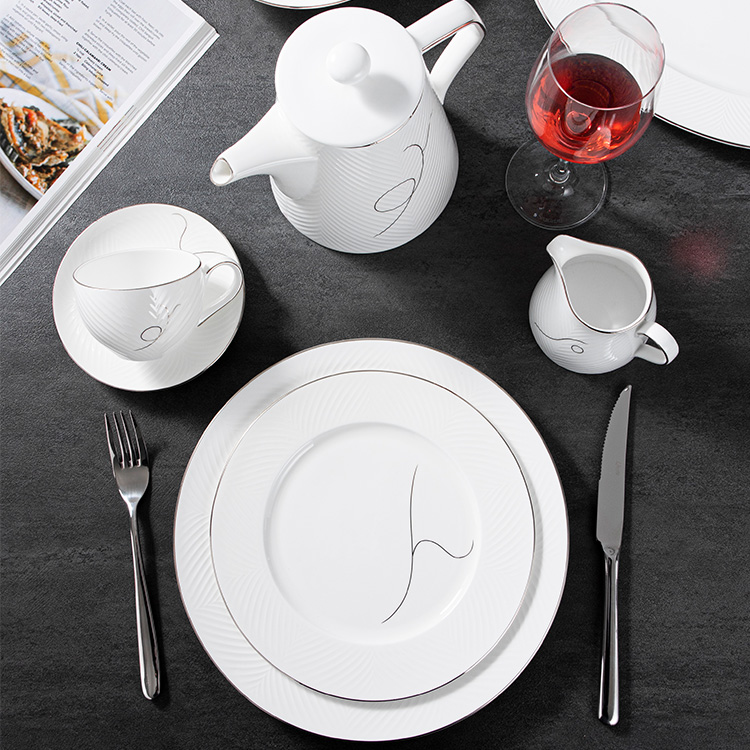
Choosing Bone China is an Investment in a Premium Experience
Picture a guest in your fine dining restaurant. They lift a piece of bone china—it’s light, warm to the touch, with a pearlescent glow. The sound of cutlery against its surface is a clean, crisp chime. This experience communicates an uncompromising commitment to quality and a sense of ceremony.
This unparalleled tactile experience is what allows your Tomahawk steak to be priced $10 higher than your competitor’s. Bone china doesn’t just sell a plate; it sells an atmospheric asset that makes premium pricing feel justified. It’s the perfect fit for any venue whose core competitive advantage is a “refined experience,” such as:
- Fine Dining Restaurants
- Hotel Executive Lounges
- Exclusive Private Clubs
Choosing Professional Porcelain is a Display of Professional Confidence
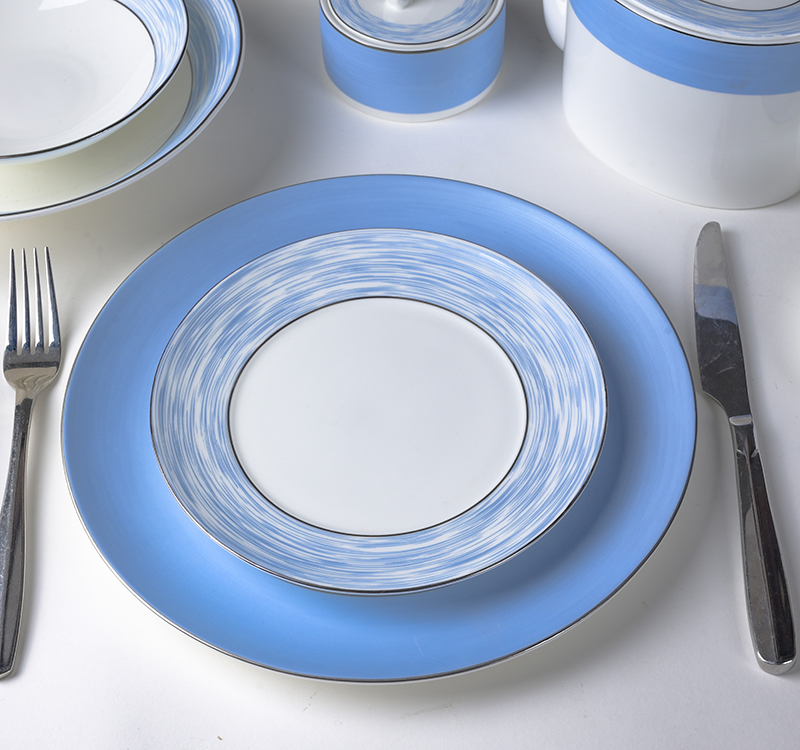
A clean, solid white porcelain plate acts like a pristine canvas, putting the spotlight squarely on the food. It tells your customers, “We don’t need gimmicks. We have absolute confidence in our culinary creations.”
This choice sends a message of efficiency, modernity, and reliability. It’s favored by restaurants that focus on culinary innovation and feature a modern, minimalist aesthetic, including:
- Artisanal Cafés
- Modern Bistros
- Business Hotels
Chefs prefer it since its clean style puts the spotlight on the food, making every dish more appealing to guests
Round 3: The Scene Dictates the Strategy—Smart Owners Never Choose Just One
In the real world of business, decisions are rarely black and white. The most intelligent approach is a hybrid strategy, using the right tool for the right job to maximize value.
For a comprehensive hotel or restaurant group, a “mixed portfolio” of tableware can deliver the highest return on investment:
- Signature Fine Dining & In-Room Dining: Use Bone China to dial up the luxury, elevating the average check and guest satisfaction.
- All-Day Dining & Banquet Halls: Deploy the most durable Fine Porcelain to ensure the lowest breakage and replacement costs under high-intensity use.
- Lobby Lounge & Café: Choose stylish and easy-to-maintain Fine Porcelain that matches a relaxed, contemporary vibe.
This strategy allows you to find the perfect equilibrium between controlling costs and elevating your brand image.
Before You Sign the P.O., Ask Yourself These 4 Questions
Before you commit to a major tableware purchase, run through this final checklist with your supplier:
- How long will it really last? Ask if the product is Hotel Grade, fully vitrified, and if it comes with a chip-resistance warranty or relevant industry certifications.
- Does it fit my brand? Place it on your table, plate your signature dish on it, and take a photo with your phone. Does it enhance the perceived value of the food, or does it make it look cheaper?
- Will my kitchen team love it or hate it? Is it easy to stack and store? Is it safe for the oven, microwave, and commercial dishwasher? Losses in operational efficiency are also hidden costs.
- Can I get more in a year? Breakage is inevitable and ongoing. Ensure your supplier can provide stable, long-term stock for replacements to avoid a mismatched collection in the future.
It’s More Than Just a Plate
Ultimately, your tableware is the most intimate touchpoint between you and your guest. During their hour-long meal, they will touch and feel their plate far more than they will speak to their server.
It is silently telling your brand’s story.
So, the next time you’re reviewing a procurement order, take a moment to ask yourself:
What story do I want this plate to tell my customer? And what is that story worth?


LET'S TALK TOGETHER
Lorem ipsum dolor sit amet, consectetur estor adipi isicing elit, sed do eiusmod tempor este uterre incididui unt ut
