




PITO Article
What Are the Differences Between Overglaze, Inglaze and Underglaze
Porcelain decoration in professional tableware production primarily uses three techniques—overglaze, inglaze, and underglaze. Each method delivers a unique visual character and performance profile, influencing color expression, durability, and long-term value. In the hospitality industry, where tableware must balance aesthetic presentation and high-frequency usage, understanding these differences is essential for choosing the right solution for hotels, restaurants, and premium dining venues.
Overglaze, Inglaze, and Underglaze Basics
Overglaze
Overglaze decoration is applied to a fully glazed and fired porcelain body, followed by a secondary low-temperature firing. This technique supports highly saturated pigments, metallic accents (gold, platinum), and detailed artistic ornamentation, resulting in a visually striking and luxurious finish. Its slightly raised texture makes overglaze ideal for statement pieces or ceremonial tableware.
However, because the pigments remain on the surface of the glaze, overglaze decoration is more susceptible to abrasion, utensil contact, and chemical detergents—a key consideration for high-volume hotel or restaurant operations.
For this reason, overglaze is commonly chosen for boutique fine-dining presentation pieces or limited-use luxury bone china, rather than high-rotation commercial tableware.
Inglaze
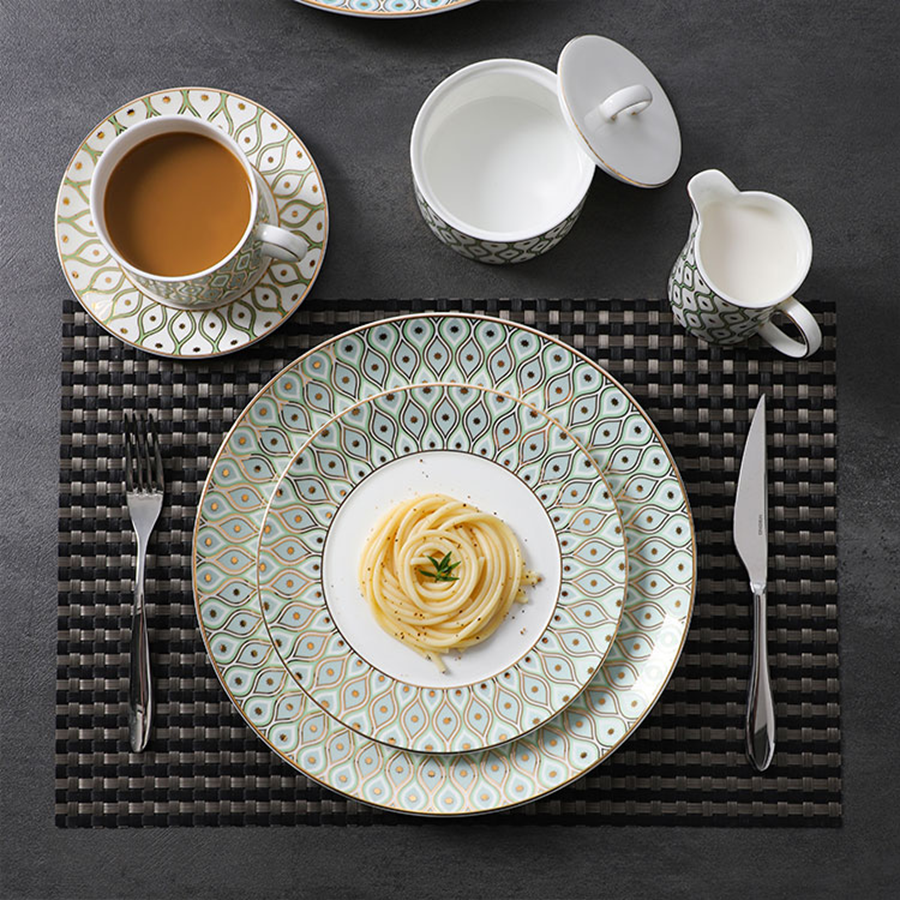
Inglaze decoration is applied on the glazed surface prior to high-temperature firing, allowing the pigments to melt into the glaze matrix. The result is a smooth, glossy finish where the design is embedded beneath the glaze—offering both elegance and protection. While the color palette is softer than overglaze, inglaze provides refined coloration ideally suited for fine-dining restaurants, hotel all-day dining venues, and premium banqueting collections.
- Compatible with metallic effects such as gold and platinum suitable for high firing.
- Resistant to long-term chemical and mechanical wear, making it a favored choice for high-end Horeca settings.
Underglaze
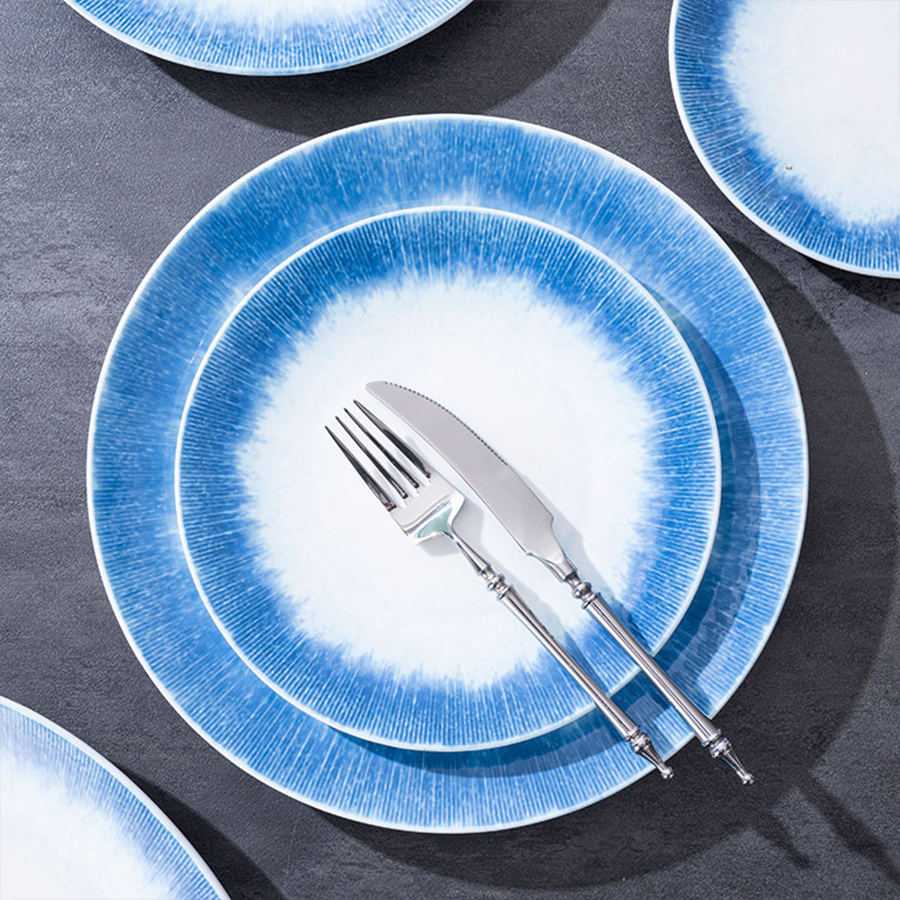
Underglaze decoration is applied directly onto the unfired porcelain body, and then sealed beneath a layer of transparent glaze. After high-temperature firing, the design becomes permanently fused beneath the glaze layer, producing a smooth surface free of tactile relief. Underglaze provides exceptional durability, color stability, and food-safety performance, making it the preferred solution for premium commercial tableware that undergoes heavy washing cycles.
- The decoration withstands thousands of industrial dishwasher cycles. And the colors remain stable without fading or peeling.
- Decoration is completely protected from direct food contact, ensuring high safety standards.
Differences Between Overglaze, Inglaze, and Underglaze
Color, Appearance, and Visual Effects
The three porcelain decoration methods differ most prominently in color expression and visual presentation. Overglaze delivers the most vibrant chromatic intensity and the widest artistic flexibility, ideal for signature luxury pieces and fine detailing. Inglaze produces a lustrous, softly blended finish with colors protected beneath the glaze—well suited for refined hotel dining environments. Underglaze offers the highest long-term stability, retaining its classic visual clarity even under heavy commercial use. While its color palette is naturally more limited due to high-temperature firing, it provides unmatched resistance to fading or peeling.
| Technique | Color Characteristics | Visual Style |
|---|---|---|
| Overglaze | Highly vibrant; supports metallic accents | Bold, glossy, decorative; suited for luxury or limited-use items |
| Inglaze | Rich but softened tones fused within the glaze | Smooth, lustrous, and protected |
| Underglaze | Stable, high-temperature pigments | Subtle, classic, and long-lasting |
Durability and Daily Use Performance
In frequent-use environments such as hotels and restaurants, durability becomes the deciding factor. Overglaze designs may deteriorate over time due to repeated washing or utensil abrasion. Inglaze offers improved longevity, as the decoration is protected within the glaze. Underglaze provides the highest performance, remaining intact even under industrial dishwashers and high-frequency use.
Professional recommendation: For high-volume Horeca or institutional operations, underglaze or inglaze porcelain provides the best combination of visual appeal, durability, and cost efficiency over the product’s lifecycle.
Production Process and Firing Requirements
| Technique | Firing Temperature (°C) | Production Features |
|---|---|---|
| Overglaze | 700–900 | Secondary decoration fired on top of glaze |
| Inglaze | 1200–1300 | Pigments melt and merge with the glaze matrix |
| Underglaze | 1200–1400 | Pigments sealed beneath a transparent glaze |
Higher firing temperatures used in inglaze and underglaze strengthen chemical resistance, scratch resistance, and thermal shock performance, all of which are essential for commercial-grade tableware used in hotel kitchens, banquet halls, and high-capacity restaurants.
Cost Considerations and Application Suitability
Overglaze is cost-effective for customized, small-batch artistic production because of its wide color range and lower firing requirements, though it requires careful use. Inglaze and underglaze generally involve higher costs due to specialized raw materials and high-temperature firing, but offer superior value over long-term usage.
- Overglaze: Ideal for luxury boutique items, premium presentation pieces, and small-batch artistic concepts where decorative impact outweighs durability.
- Inglaze: Suitable for fine dining establishments requiring aesthetics and durability.
- Underglaze: The most reliable choice for large hotels, resort groups, corporate catering, banquet operations, and high-frequency service environments.
PITO Craftsmanship — Hospitality-Grade Quality
As a leading manufacturer of professional porcelain tableware, PITO elevates overglaze, inglaze, and underglaze production through advanced craftsmanship and strict quality standards tailored for Horeca operations.
High-Temperature Firing for Stability
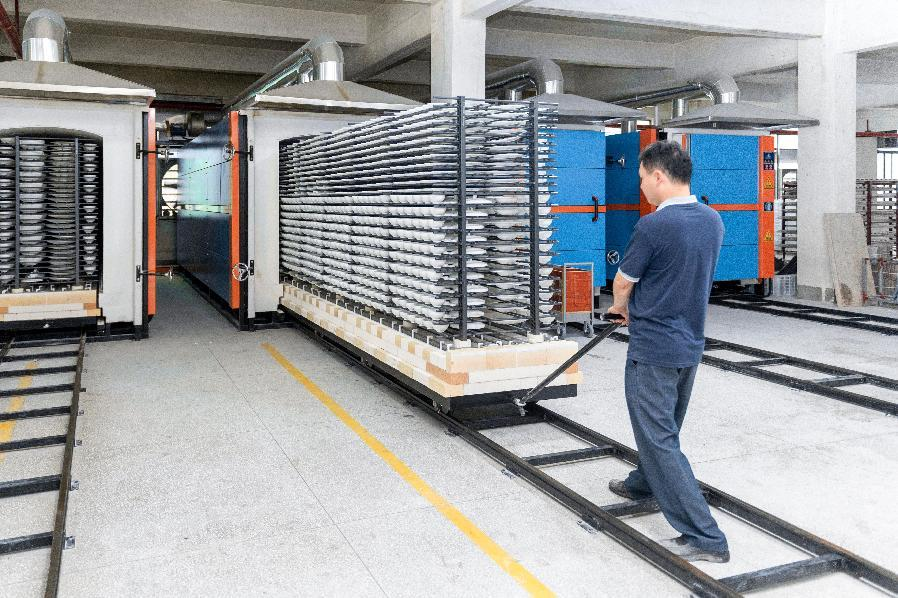
Each product is fired precisely at 1200–1400°C, strengthening glaze hardness, color stability, thermal shock resistance, and overall structural density—ideal for continuous industrial dishwashing and high-frequency service.
Hospitality-Level Durability Testing
PITO tableware is rigorously tested for:
- Industrial dishwasher cycles
- Scratch & abrasion resistance
- Thermal shock performance
- Stackability and load strength
Ensuring reliability in hotels, restaurants, buffets, and large catering operations.
With decades of expertise, PITO refines each technique with:
- Enhanced metallic adhesion for overglaze
- Controlled fusion curves for uniform coloration.
- Ultra-smooth underglaze for high stacking durability
Whether using overglaze for luxury expression, inglaze for refined dining, or underglaze for large-scale operations, PITO ensures reliable quality across all decoration techniques.
Conclusion
For hospitality professionals, choosing the right porcelain decoration method is both a design and operational decision.
Choose Overglaze if you need stunning luxury presentation pieces.
Choose Inglaze if you want refined visual quality with dependable durability.
Choose Underglaze if your venue requires robust, long-lasting tableware for high turnover and industrial dishwashing.
Each method serves a different purpose—ensuring your tableware aligns with your brand image, operational needs, and guest experience.


LET'S TALK TOGETHER
Lorem ipsum dolor sit amet, consectetur estor adipi isicing elit, sed do eiusmod tempor este uterre incididui unt ut
