




PITO Article
Top Tips for Tableware Selection in Western Restaurants
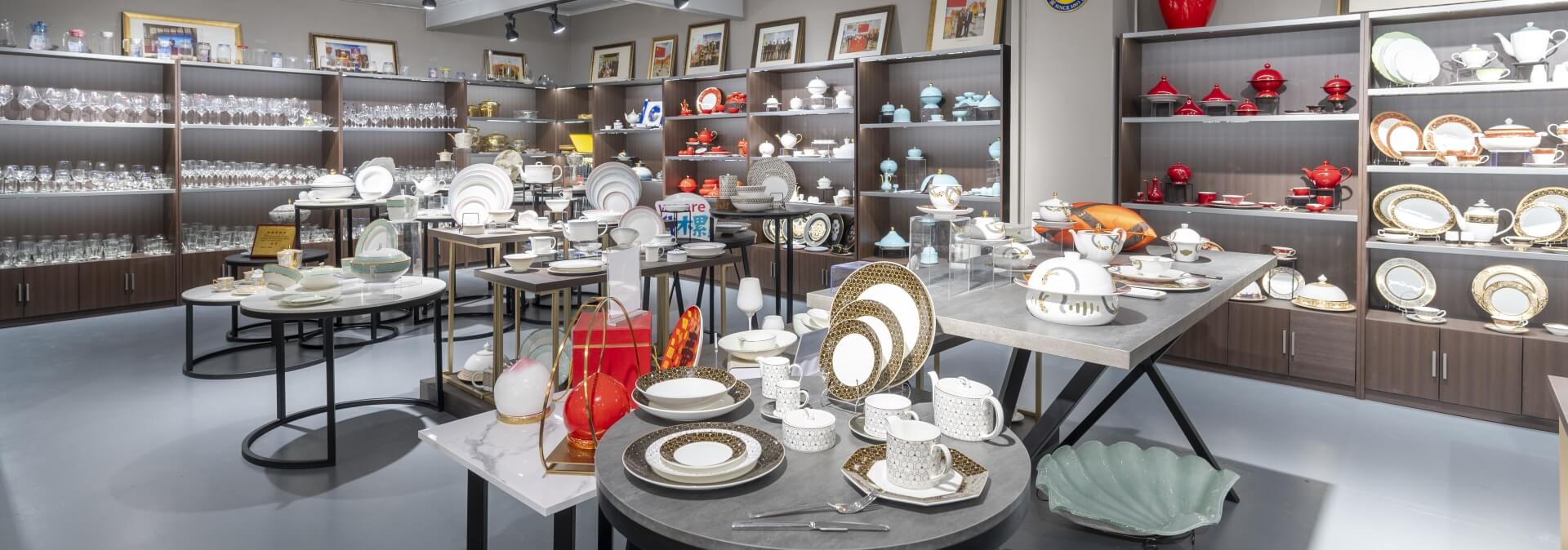
In Western restaurants, every visual and tactile detail contributes to how guests perceive quality, professionalism, and care. Tableware selection is not only about aesthetics—it directly influences first impressions, dining atmosphere, and operational efficiency throughout daily service. Choosing tableware that balances visual refinement, material strength, and long-term value allows restaurants to deliver a consistent and memorable dining experience. Drawing on extensive experience in hospitality tableware, PITO provides premium porcelain and bone china solutions designed for both elegance and performance..
Aligning Tableware With Brand
A restaurant’s concept extends beyond cuisine and interior design—it is equally reflected in tableware selection. When tableware aligns with brand positioning, it reinforces the dining narrative and creates a cohesive guest experience. Fine-dining steakhouses often rely on refined porcelain plates to communicate sophistication, while rustic bistros may prefer textured finishes and warmer tones to express approachability and comfort.
Rather than following trends, successful restaurants select tableware that visually and tactually supports their brand identity, helping guests instantly recognize the restaurant’s character.
Tip: Professional tableware choices act as silent brand ambassadors. When materials, finishes, and forms reflect the restaurant’s personality, they strengthen brand recall and elevate the overall dining perception.
Porcelain tableware offers several advantages for Western restaurants:
- It enhances food presentation, making each dish look more appealing.
- The warmth and texture of ceramics add comfort and luxury to the dining atmosphere.
- Design flexibility enables alignment with diverse restaurant concepts and interiors.
P&T Royal Ware provides a wide range of porcelain and bone china options, allowing you to find the perfect fit for your brand’s image.
Matching style and decoration
When you choose tableware that matches your restaurant décor, you create a unified and inviting atmosphere. The right tableware can highlight your interior design and make your food look even more appealing. For example, PITO’s High Quality Porcelain Dinnerware Set offers elegant patterns and a refined finish. This set fits perfectly in upscale dining rooms with modern or classic themes.
- Dinnerware that resonates with your cuisine creates harmony at the table.
- The colors and textures of plates can amplify the presentation of your dishes.
- A well-matched set transforms the dining experience into a blend of flavor and design.
If your restaurant features minimalist décor, select simple white porcelain plates to keep the focus on the food. For a more vibrant space, choose dinnerware with bold patterns or unique shapes. Tableware Selection should always reflect your restaurant’s personality and style.
Creating Cohesive Settings
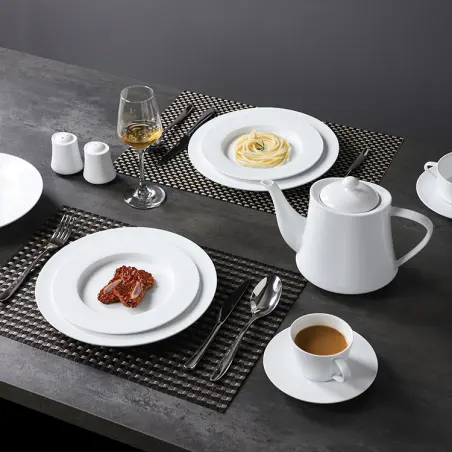
Cohesive table settings signal professionalism and attention to detail before service even begins. Consistency in tableware selection across courses—from appetizers to desserts—helps restaurants maintain brand standards while guiding guest expectations. Through modular porcelain collections, PITO enables Western restaurants to create unified table settings that remain flexible for diverse menus and service styles.
When you invest in quality dinnerware that matches your décor and menu, you show guests that you care about every aspect of their visit. This approach helps your restaurant stand out and encourages guests to return.
Material performance is one of the most critical factors in professional tableware selection. Beyond appearance, material choice affects durability, replacement cycles, and long-term operating costs. Based on years of supplying porcelain and bone china to Western restaurants and hotel groups, P&T Royal Ware evaluates materials under real service conditions—where frequent handling, washing, and stacking place continuous demands on tableware performance.
Porcelain vs. Bone China
Porcelain and bone china are both widely used in Western restaurants, yet their performance characteristics differ in ways that influence daily operations. The table below highlights the key features of each:
| Material | Durability Features | Strength Comparison |
|---|---|---|
| Bone China | Approximately 40% stronger than standard porcelain; high impact resistance; chip resistant; non-stainable and easy to clean | More durable for day-to-day use |
| Porcelain | Hard and strong; suitable for high-traffic environments; rigid and less porous | Less durable than bone china |
Bone china is often favored in fine-dining settings where refined appearance and strength must coexist, while porcelain remains a reliable choice for restaurants requiring consistent performance under high-volume service. P&T Royal Ware assists Horeca clients in selecting materials based on service intensity, menu structure, and handling conditions rather than aesthetics alone.
Long-term value in Tableware Selection is closely linked to maintenance efficiency and product lifespan. In commercial environments, even minor improvements in durability can significantly reduce replacement rates and operational disruptions.
| Type | Durability | Handling Requirements |
|---|---|---|
| Porcelain | More durable, less prone to chipping | Suitable for fast-paced environments |
| Bone China | Requires careful handling to prevent chipping | Handle with care, avoid stacking tightly |
High-quality porcelain and bone china from PITO are designed to maintain structural integrity and visual consistency over extended service cycles, helping Horeca operators achieve better cost control over time.
Practical Tips for Balancing Elegance and Resilience
When you make decisions about Tableware Selection, keep these expert tips in mind:
- Choose designs that match your restaurant’s cuisine and atmosphere.
- Assess the durability of each material for commercial use and frequent washing.
- Select plate sizes and shapes that fit your menu and serving style.
- Consider the weight and stackability of plates to help your staff work efficiently.
- Make sure your tableware is compatible with dishwashers if you plan to use them.
- Evaluate the long-term value of investing in quality items over cheaper alternatives.
- Work with reliable suppliers who can meet your needs quickly and consistently.
You can avoid common mistakes by thinking about both the look and the practical demands of your restaurant. Heavy plates may look impressive, but they can be hard for staff to handle and more likely to break. Unusual shapes might not suit your signature dishes or may not stack well, leading to storage issues.
P&T Royal Ware’s fine porcelain and bone china collections give you the flexibility to balance elegance, durability, and ease of maintenance. With the right choices, you create a dining experience that delights guests and stands the test of time.
Balancing Visual Appeal
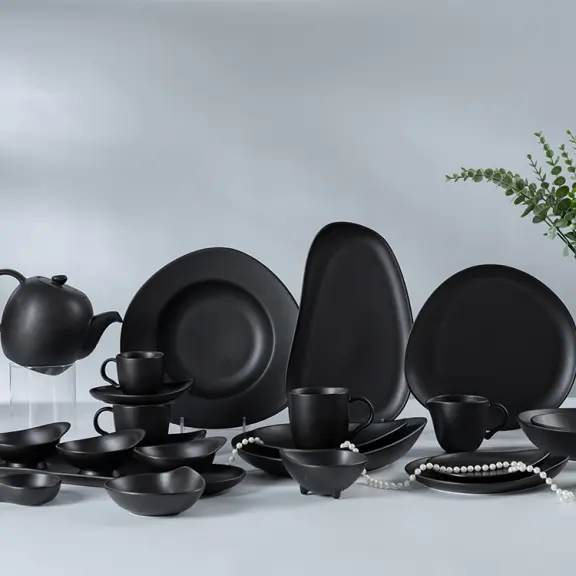
Effective Tableware Selection requires balancing three essential dimensions: aesthetics, functionality, and cost efficiency. In Western restaurants, visual appeal is often the first point of contact between the guest and the dining experience. Refined ceramic plates enhances food presentation, supports plating creativity, and communicates a sense of quality and attention to detail that directly influences guest perception.
Cost-Effective Choices
However, aesthetics alone are not sufficient in professional Horeca environments. Tableware must also perform reliably under daily commercial use. Factors such as weight, edge strength, stackability, and resistance to chipping have a direct impact on service speed, staff efficiency, and breakage rates. Plates that appear elegant but prove impractical in high-turnover service can quickly increase operational costs and disrupt workflow. Therefore, it is very necessary to purchase durable porcelain and bone china tableware.
Cost considerations in Tableware Selection should be evaluated from a long-term operational perspective rather than initial unit price alone. Premium porcelain and bone china often deliver stronger value over time by reducing replacement frequency, maintaining visual consistency, and supporting sustainable procurement strategies.
By focusing on durability, lifecycle performance, and consistent supply, PITO helps Horeca clients achieve better total cost control while protecting brand standards.
| Material | Durability | Sustainability | Long-term Cost Savings |
|---|---|---|---|
| Porcelain | High | Yes | Yes |
| Bone China | High | Yes | Yes |
| Melamine | Low | No | No |
Multi-Purpose Pieces
Flexible tableware adapts to various menu items and dining styles, reducing inventory needs.
Here are some key advantages of multi-purpose tableware:
| Advantage | Description |
|---|---|
| Health Benefits | Made from natural materials, free from harmful chemicals like BPA. |
| Environmental Sustainability | Sustainable throughout their lifecycle, returning to the earth without harm. |
| Aesthetic Versatility | Available in many colors and patterns to match any décor. |
| Durability | Scratch-resistant and long-lasting, maintaining their appearance for years. |
| Heat Resistance | Withstand high temperatures, moving from refrigerator to oven to table with ease. |
| Improved Dining Experience | Enhance food presentation and elevate everyday meals into special occasions. |
- Correct plate sizes control portions, enhance presentation, and reduce waste.
- Unique shapes (round, square, triangular) highlight signature dishes and reinforce brand identity.
- Colors impact perception: white emphasizes vibrancy, black creates drama, earthy tones suit rustic themes.
Enhancing Presentation
Accessories and serving dishes play a key role in elevating the dining experience. Beyond holding food, they set the stage for each meal and create memorable moments for guests. Thoughtful selection of colors and textures influences how guests perceive dishes and the overall atmosphere.
Here is a table that shows how plate color can impact the dining experience:
| Plate Color | Impact on Dining Experience |
|---|---|
| White | Enhances visual appeal of colorful foods, associated with cleanliness and versatility. |
| Black | Creates high contrast, adds sophistication, but may not suit dark dishes. |
| Brown | Evokes rustic feeling, complements warm-toned foods. |
| Red | Stimulates appetite, adds vibrancy to neutral foods. |
| Yellow | Energizes the setting, pairs well with green foods. |
| Green | Enhances perception of freshness, ideal for salads and vegetables. |
| Blue | Rarely used, but can enhance seafood and contrast with yellow/orange foods. |
Color choice enhances presentation: white plates highlight signature dishes, black adds drama, brown suits rustic settings, red and yellow energize, green emphasizes freshness, and blue enhances seafood presentation.
P&T Royal Ware offers coordinated tableware and accessory solutions, enabling Horeca buyers to implement unified table settings that perform consistently across different service scenarios.
Coordinating With Main Tableware
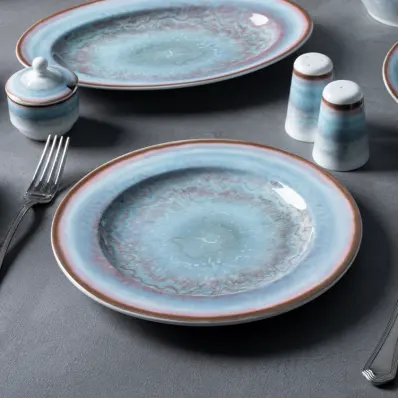
You achieve a unified table setting when you coordinate accessories with your main tableware. Maintaining a consistent tableware and accessory combination ensures professional presentation and operational efficiency. Best practices for Horeca settings include:
- Implement a cohesive color scheme across plates, serving dishes, and accessories.
- Mix textures strategically (e.g., glossy porcelain with matte serving pieces) for visual depth.
- Arrange place settings and centerpieces to support workflow and guest experience.
Consistent coordination demonstrates attention to detail and reinforces brand identity across multiple service areas.
Common Mistakes to Avoid
Overlooking Practical Needs
In Horeca environments, durability, hygiene, and ease of use are critical. Selecting tableware and accessories without considering these factors can increase replacement costs and operational inefficiencies.
| Aspect | Impact on Operations | Impact on Guest Satisfaction |
|---|---|---|
| Aesthetic Appeal | Improves presentation and dining experience | Makes meals memorable and inviting |
| Durability | Lowers replacement and maintenance costs | Keeps tableware looking new over time |
| Hygiene | Meets health regulations | Builds trust and comfort during dining |
Recommendation: Prioritize durable, easy-to-clean accessories that withstand frequent use and handling.
Ignoring Guest Comfort
Ergonomic tableware and serving items improve guest satisfaction:
- Plates, cutlery, and glasses should be easy to handle.
- Ensure plate sizes fit table layouts without overcrowding.
- Glassware should suit the beverage type and be comfortable to hold.
Comfort-oriented tableware reduces guest complaints and supports positive reviews in high-volume operations.
Inconsistent Table Settings
Uniform table presentation reflects professionalism. Inconsistent settings can confuse guests and negatively affect brand perception:
- Maintain consistent styles and color schemes.
- Align formality of settings with service standards.
- Train staff on table setup procedures.
A coherent presentation enhances operational efficiency and reinforces brand standards across multiple venues.
FAQs
What tableware material works best for busy Western restaurants?
You should choose fine porcelain or bone china. Both offer high durability and elegance. Porcelain resists chipping and suits fast-paced service. Bone china provides extra strength and a refined look.
Can I customize tableware with my restaurant’s logo?
Yes, you can request custom designs and logo printing from P&T Royal Ware. Customization helps you reinforce your brand and create a memorable dining experience for guests.
Is porcelain dinnerware safe for dishwashers and microwaves?
Porcelain dinnerware from P&T Royal Ware is dishwasher and microwave safe. You can clean it easily and use it for reheating food without worry.
How do I select the right plate size for my menu?
Match plate size to your menu items. Use larger plates for main courses and smaller ones for appetizers or desserts. Consistent sizing helps you control portions and enhance presentation.
What certifications should I look for in restaurant tableware?
| Certification | Why It Matters |
|---|---|
| FDA | Ensures food safety |
| CE | Meets EU standards |
| ISO9001 | Guarantees quality |
You should check for these certifications to ensure safety and quality in your restaurant.


LET'S TALK TOGETHER
Lorem ipsum dolor sit amet, consectetur estor adipi isicing elit, sed do eiusmod tempor este uterre incididui unt ut
