


PITO Article
Is Porcelain Dinnerware Food Safe? 5 Key Safety Factors You Should Know
In international hotels and fine dining establishments, tableware must meet uncompromising standards for food safety, durability, and long-term performance.
Porcelain dinnerware is widely trusted in premium hospitality environments when it complies with internationally recognized food-contact regulations, uses food-safe glazes, and is validated through certified testing systems. In professional foodservice use, porcelain dinnerware safety is influenced by several regulated factors, including food contact duration, material composition, exposure to acidic ingredients, and repeated high-temperature use in commercial kitchens.
The following factors are commonly evaluated under international food-contact regulations for ceramic tableware used in hospitality environments:
| Factor | Description |
|---|---|
| Time | Prolonged contact between food and porcelain increases chemical leaching. |
| Material Composition | The raw materials and firing temperature affect the risk of leaching heavy metals like lead and cadmium. |
| Acidity of Food | Acidic foods accelerate leaching of heavy metals from glazes. |
| Temperature | Higher temperatures increase the rate of chemical migration from the dinnerware. |
Professional-grade porcelain manufacturers design products to perform consistently under these conditions, aligning material selection and firing processes with international food-contact requirements. Within this framework, PITO develops porcelain dinnerware aligned with internationally recognized food-contact standards.
Lead And Cadmium Risks
Why Lead And Cadmium Matter
Lead and cadmium limits are strictly regulated under international food-contact standards for ceramic tableware.
These heavy metals are controlled to prevent migration into food, particularly in professional hospitality settings where tableware is exposed to acidic ingredients and frequent high-temperature use. Even low levels of heavy metal exposure may pose long-term health risks, particularly in environments where tableware is used intensively and repeatedly.
Tip: Always choose dinnerware that meets strict safety standards to protect your guests and staff.
| Health Risk | Description |
|---|---|
| Lead Exposure | Can cause developmental disorders, learning problems, and high blood pressure. |
| Cadmium Exposure | Linked to kidney damage and bone fragility. |
| Regulatory Concerns | Current limits may not fully protect consumers from long-term exposure. |
Regulatory agencies set strict limits for lead and cadmium leaching. International authorities establish migration limits—rather than material content limits—based on vessel type and intended use.
For example, the FDA sets strict migration limits for lead and cadmium depending on the type of ceramic ware. The EU restricts lead to 0.8 mg/dm² and cadmium to 0.07 mg/dm². PITO porcelain dinnerware is aligned with these international limits and selected to ensure consistent compliance across professional hospitality use.
Lead-Free Porcelain Identification
In professional hospitality sourcing, food safety assurance relies on internationally recognized certifications and documented compliance rather than visual inspection alone. Look for products from reputable brands that display international certifications such as FDA, CE, and LFGB. These marks show that the dinnerware meets global Porcelain Dinnerware Safety standards.
When specifying porcelain dinnerware for hotels and restaurants, the following criteria are commonly required:
- Purchase from trusted brands that use certified, lead- and cadmium-free materials. PITO’s Premium Fine Porcelain Plates are supported by internationally recognized certification frameworks, ensuring suitability for long-term use in premium hospitality environments.
- Review the manufacturer’s safety documentation and production process. High-quality porcelain uses controlled glazes and high-temperature firing to prevent heavy metal leaching.
- Avoid older or unmarked products, especially those without clear origin or certification.
Manufacturers test porcelain for heavy metals using advanced laboratory methods. PITO’s commitment to Porcelain Dinnerware Safety means every plate meets or exceeds international standards, giving you peace of mind in hospitality settings.
Glaze Safety In Porcelain Dinnerware
Food-Safe Glaze Features
Glaze safety plays a critical role in Porcelain Dinnerware Safety. Glaze stability is a critical requirement for porcelain dinnerware used in professional foodservice environments. Food-safe glazes are evaluated to ensure resistance to acid exposure, repeated washing, and high-temperature use. Manufacturers must follow precise firing temperatures and application techniques to achieve a stable, non-toxic finish.
When you select porcelain dinnerware, look for these essential features in food-safe glazes:
- Metal release tests confirm the absence of harmful leaching.
- Acid resistance prevents reactions with acidic foods.
- Smooth texture makes cleaning easier and reduces the risk of bacteria buildup.
- Proper firing temperature ensures the glaze bonds securely to the porcelain.
- Compatibility with the clay body increases durability and prevents issues like crazing.
Glaze stability is a critical requirement for porcelain used in professional foodservice environments.
Certified laboratory testing—not household methods—is the industry standard for evaluating glaze safety.
Within this framework, PITO applies certified testing protocols to ensure consistent glaze performance throughout product life cycles.
Identifying Safe Glazes
In premium hospitality procurement, glaze safety is verified through certified laboratory testing rather than informal surface or household tests.
PITO products are evaluated according to internationally recognized testing protocols to ensure consistent glaze stability throughout their service life.
Try a thermal shock test by alternating between ice water and boiling water. If the glaze cracks or shows signs of instability, it may not be suitable for food contact. Always choose products from reputable brands like PITO, which prioritize Porcelain Dinnerware Safety through certified materials and thorough testing.
Tip: Follow the manufacturer’s instructions for use and care. Proper handling helps maintain the integrity of the glaze and ensures long-term safety.
Porcelain Dinnerware Safety Certifications
Key Certifications (FDA, CE, LFGB)
In professional procurement, certifications serve as formal verification that porcelain dinnerware meets defined international food-contact requirements. Certifications serve as proof that the products meet strict international safety standards. PITO’s dinnerware carries multiple certifications, including FDA, CE, and LFGB, which demonstrate a commitment to Porcelain Dinnerware Safety. These certifications ensure that every plate, bowl, and cup you use in your establishment is safe for food contact and free from harmful substances.
The table below outlines the main international certifications you should look for:
| Certification | Description | Key Requirements |
|---|---|---|
| FDA | U.S. regulation for food contact materials | Testing for migration limits (e.g., lead/cadmium ≤0.5mg/L) |
| LFGB | German regulation for food contact materials | Tests for sensory, physical, and chemical compliance (e.g., lead ≤0.2mg/kg) |
| CE | General safety compliance in the EU | Proof of compliance with the General Product Safety Directive (GPSD) |
You can trust that PITO’s Premium Fine Porcelain Plates meet or exceed these requirements. This level of compliance is especially important for hospitality buyers who must protect guests and maintain a reputable brand image.
Certification Labels And Their Meaning
Certification labels on porcelain dinnerware provide you with quick assurance of product safety. These labels indicate that the dinnerware has passed rigorous testing and meets international standards. Understanding what these labels mean helps you make informed purchasing decisions.
| Certification | Description |
|---|---|
| FDA | Ensures that ceramic tableware is free from harmful levels of lead and cadmium. Products are labeled as ‘lead-free’ or ‘cadmium-free.’ |
| EU Standards | Sets limits on lead and cadmium in ceramic tableware sold in the EU. |
| Japan Standards | Requires radiation testing for ceramic tableware. |
To verify the authenticity of certification labels, follow these steps:
- Look for official certification stamps that indicate authenticity.
- Evaluate the craftsmanship and artistry, noting fine details and skilled work.
- Assess the weight and thinness of the porcelain, which should feel lightweight yet sturdy.
- Consider the price, as genuine certified porcelain typically has a higher cost reflecting quality.
Certifications play a central role in hospitality tableware specification, serving as formal verification of food-contact safety and regulatory compliance. Certification not only protects your guests but also supports your reputation for quality and safety. PITO’s dedication to Porcelain Dinnerware Safety ensures that you can serve every meal with confidence.
Appliance Safety: Microwave, Dishwasher
Safe Use In Appliances
In high-turnover hospitality environments, porcelain dinnerware must maintain structural integrity under frequent microwave heating, dishwasher cycles, and temperature variation. Designed for professional hospitality use, PITO’s Premium Fine Porcelain Plates demonstrates reliable performance under repeated washing and heating conditions.
If you use non-microwave-safe or non-dishwasher-safe porcelain, you risk several hazards. The table below outlines common risks in commercial kitchens:
| Risk Type | Description |
|---|---|
| Breakage and Cracking | Uneven heating can cause porcelain to crack or break, especially if old. |
| Fire Hazard | Metal decorations can spark in a microwave, posing a fire risk. |
| Burn Hazard | Non-microwave-safe porcelain may heat unevenly, risking burns when touched. |
| Leaching of Toxic Chemicals | Certain glazes may leach harmful substances when heated in a microwave. |
You protect your staff and guests by choosing dinnerware that withstands high temperatures and repeated washing. PITO’s plates are chip-resistant and maintain their structure after impacts. You can safely use them in dishwashers and microwaves, which streamlines operations and reduces replacement costs. Leading brands, including PITO, design their porcelain to meet these standards, ensuring Porcelain Dinnerware Safety in every setting.
Checking Appliance-Safe Labels
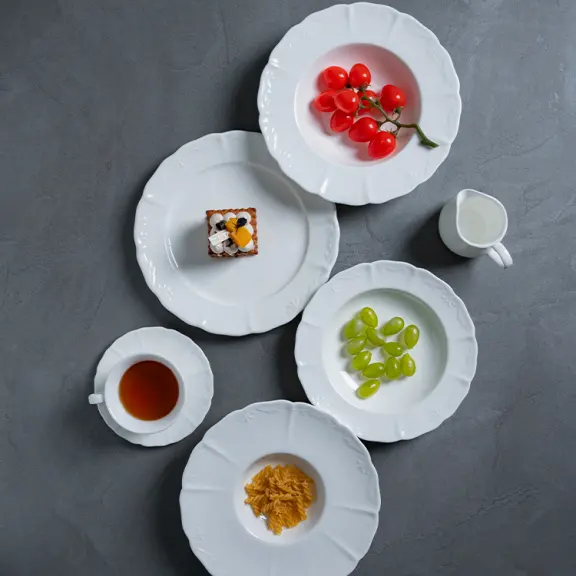
You should always check for appliance-safe labels before using porcelain dinnerware in microwaves or dishwashers. Manufacturers often place symbols on the bottom of each piece. Look for a dishwasher-safe symbol or a microwave-safe icon, which usually appears as squiggly lines inside a square. If you do not see these symbols, contact the manufacturer for confirmation.
- Look for dishwasher safe symbols on the bottom of the dinnerware.
- Identify microwave safe symbols, which often appear as squiggly lines inside a square.
- If no symbols are present, consider checking with the manufacturer for confirmation.
Most high-quality porcelain dinnerware, such as PITO’s Premium Fine Porcelain Plates, comes with clear care instructions. These instructions confirm that the plates are microwave- and dishwasher-safe. You can trust these markings to guide safe use in commercial and home kitchens.
Proper Use And Care For Porcelain Dinnerware
Daily Use Tips
Proper handling and care help preserve the appearance and performance of porcelain dinnerware throughout its service life in hospitality environments. Avoid exposing plates to sudden temperature changes, such as moving them directly from the refrigerator to a hot oven. Handle each piece gently, especially when stacking or washing, to prevent chips and cracks. Choose wooden or silicone utensils to protect the glaze from scratches. These habits help maintain the integrity and appearance of your dinnerware in busy hospitality settings.
Tip: PITO’s dinnerware undergoes rigorous endurance testing, including thermal shock and dishwasher resistance, so you can trust its durability in commercial environments.
Cleaning And Maintenance
Proper cleaning ensures hygiene and preserves the beauty of your porcelain dinnerware. Wash each piece with warm water and a mild detergent, using a soft sponge or cloth. Avoid abrasive materials that can scratch the surface. Rinse thoroughly and dry with a lint-free cloth to prevent water spots. If you use a dishwasher, select the gentle cycle and a low-temperature setting. Store dishes so they do not touch each other, using felt or paper separators to avoid scratches. For stubborn stains, apply a paste of baking soda and water, let it sit, then wash as usual. Always handle thin edges and delicate handles with care.
| Testing Protocol | Purpose | Procedure Summary |
|---|---|---|
| Thermal Shock Testing | Checks durability after temperature changes | Move from oven to cold water, inspect for cracks |
| Stain Resistance Testing | Verifies color and cleanliness retention | Apply food, clean, check for visible changes |
| Dishwasher Resistance Testing | Assesses damage after dishwasher use | Wash, inspect for chips or cracks |
| Water Leakage Check | Ensures no leakage | Fill with water, check for moisture after 2 hours |
| Microwave Adaptability Test | Tests microwave safety | Heat, inspect for defects |
When To Replace Dinnerware
You should inspect your porcelain dinnerware regularly for signs of wear. Replace any items showing glaze corrosion, such as chalky or grey residue after washing. Watch for crazing, which appears as spiderweb-like cracks in the glaze and can harbor bacteria. Use a lead test kit if you suspect older pieces may contain lead. Avoid using dinnerware made before 1971, as it may not meet current safety standards. These steps help you maintain Porcelain Dinnerware Safety and protect your guests.
Note: PITO’s commitment to quality means every piece is tested for hygiene and endurance, ensuring safe use throughout its lifespan.
You should always focus on these five key safety factors for porcelain dinnerware:
- Lead
- Cadmium
- BPA
- Phthalates
- Thermal stability
Choosing certified products ensures Porcelain Dinnerware Safety and guest satisfaction. Review certifications before purchase:
| Certification | Description |
|---|---|
| FDA | Ensures food safety standards are met. |
| CE/EU | Compliance with European health and safety regulations. |
| ISO9001 | Quality management standards. |
| LFGB | Safe for food contact. |
| SABER | Gulf standards compliance. |
| BSCI | Ethical supply chain practices. |
| AEO | Secure and compliant business. |
Porcelain is often thought to be only for special occasions, but it can elevate everyday dining experiences.
For hospitality buyers, evaluating food safety is not about isolated claims—it is about understanding how materials, processes, and compliance systems work together to support long-term operational confidence.
Within this compliance framework, PITO develops porcelain dinnerware aligned with internationally recognized food-contact standards for global hospitality use.
FAQs
How can you tell if porcelain dinnerware is food safe?
You should check for certifications like FDA, CE, or LFGB on the packaging or product. Trusted brands, such as PITO, display these marks. You can also review the manufacturer’s safety documentation for assurance.
Is all porcelain microwave and dishwasher safe?
Not all porcelain is safe for appliances. You must look for microwave- and dishwasher-safe symbols on the bottom of each piece. PITO’s Premium Fine Porcelain Plates include these labels for your convenience.
What should you do if your porcelain dinnerware develops cracks or crazing?
You should stop using any pieces with cracks or crazing. These defects can harbor bacteria and compromise food safety. Replace damaged items promptly to protect your guests and staff.
Can you use porcelain dinnerware for acidic foods?
Yes, you can use high-quality porcelain for acidic foods. Food-safe glazes, like those on PITO’s dinnerware, resist acid and prevent leaching. Always verify that your dinnerware meets international safety standards.
Why do certifications matter for hospitality buyers?
Certifications prove that your dinnerware meets strict safety and quality standards. They help you avoid legal issues and protect your brand reputation. You should always choose certified products for peace of mind.


LET'S TALK TOGETHER
Lorem ipsum dolor sit amet, consectetur estor adipi isicing elit, sed do eiusmod tempor este uterre incididui unt ut
