


PITO Article
Exploring Pottery & Tradition as Your Go-To Ceramic Tableware Suppliers
You need tableware that survives commercial dishwashers, busy banquet services, and the daily grind of a hotel restaurant. It still has to look good on the table after thousands of cycles. That performance does not come from branding or packaging. It comes from materials and process, both rooted in pottery traditions stretching back centuries.
This article covers what “pottery tradition” actually means for a hospitality buyer, how it affects durability and cost, and what to ask a ceramic tableware supplier before you place an order.
Why pottery tradition still matters in commercial tableware
Craft heritage and product performance are connected in ways that are easy to overlook when you are comparing quotes. Kilns that have operated for decades build process knowledge that shortcuts cannot replicate. Think about it this way: a supplier whose team knows why a glaze behaves differently at 1300°C versus 1280°C is not guessing. That knowledge came from firing tens of thousands of pieces and learning from every one.
In ceramic tableware, “tradition” refers to four things that directly affect what lands on your tables:
- Raw material standards: knowing which kaolin deposits produce the whitest, most consistent body
- Firing discipline: maintaining precise temperatures across kiln loads, batch after batch
- Glaze formulation: balancing hardness, gloss, and stain resistance through formulas refined over years
- Decoration techniques: under-glaze, in-glaze, and on-glaze methods that determine whether a pattern lasts one season or ten
These are practical factors, not romantic ideas. Chinese porcelain has been exported worldwide for over a thousand years, and the fundamentals have not changed. Kaolin purity, high-temperature vitrification, controlled glaze chemistry. The same things that made Ming-dynasty porcelain valued across Europe are what make modern hospitality-grade porcelain hold up in hotel service today.
The techniques that kept a 14th-century porcelain bowl intact through centuries of use are the same principles that keep your plates chip-free through thousands of commercial wash cycles.
What real craftsmanship looks like in a porcelain tableware supplier
High-temperature firing and why it affects your tables
When a supplier says they fire at 1320°C, that number tells you something specific about how the product will perform. At that temperature, the porcelain body becomes fully vitrified. It forms a dense, glass-like structure with near-zero water absorption, which is what makes the surface resistant to staining, chipping, and the thermal shock of going from a hot commercial dishwasher to a cold pass.
Lower firing temperatures produce a different result. The body stays more porous, absorbs moisture over time, and degrades faster under repeated dishwasher cycles. The difference probably will not show up in a sample. It shows up six months into service, when plates start staining, chipping, or warping.
PITO uses a single high-temperature firing process at approximately 1320°C. The result is consistent hotel-grade output: uniform color and glaze quality across batches, mechanical performance that holds up in commercial dishwashers, and consistent plate weight and shape for plating and service workflow.
Raw materials that determine durability
The decisions a supplier makes at the raw-material stage decide whether your plates chip after 200 washes or 2,000. The main variables are kaolin purity, iron content, and how well the mineral blend is balanced.
| Material Factor | What It Controls | Impact on Hospitality Use |
|---|---|---|
| Kaolin purity | Whiteness, smoothness, firing stability | Consistent appearance across large orders |
| Low-iron sourcing | Prevents yellowing of the body | Plates stay white, not cream, after years of service |
| Feldspar and quartz balance | Vitrification temperature and body strength | Determines chip resistance and thermal shock tolerance |
| Petuntse content | Translucency and glaze bonding | Affects both aesthetics and glaze durability |
P&T Royal Ware sources low-iron kaolin from certified suppliers to maintain consistent whiteness, purity, and firing performance. These material choices are deliberate. They are the reason the finished product holds up in luxury hotels and high-volume banquet settings.
Tip: When evaluating samples, hold a plate up to the light. A consistent, faint translucency with no dark spots or uneven patches usually indicates high-quality raw materials and proper firing.
Decoration techniques and their commercial lifespan
Not all decoration methods are equal when it comes to surviving commercial use. Understanding the difference helps you choose patterns that stay sharp for years instead of fading after a few dozen washes.
Under-glaze decoration applies color before glazing and fires it under the glaze layer. The design is physically protected by the glaze. It does not fade, scratch, or wear off. This is the most durable option for hotels and restaurants.
In-glaze decoration fuses the design into the glaze layer itself during firing. It offers good durability and is commonly used for mid-range commercial patterns.
On-glaze decoration applies color and metallic accents (including gold rims) on top of the fired glaze, then fires again at a lower temperature. It allows the most intricate designs but is less resistant to abrasion. Best suited for formal dining or low-turnover settings.
Beyond these techniques, decal application enables precise reproduction of logos and patterns for branded collections. A supplier who can handle all three methods gives you more flexibility: durable patterns for high-volume service and premium finishes for fine dining, all from one source.
How to evaluate a porcelain tableware supplier’s craft background
Certifications that prove process control
Certifications are a practical shorthand for whether a supplier’s processes are documented, audited, and repeatable. Here is what the most common ones actually tell you:
| Certification | What It Verifies | Why It Matters for Your Operation |
|---|---|---|
| ISO 9001 | Quality management system with documented processes | Consistent product quality across batches |
| FDA (21 CFR) | Food-contact safety for the US market | No harmful substance leaching into food |
| LFGB | German food safety standard with strict heavy-metal limits | Recognized as one of the toughest global standards |
| CE | Health, safety, and environmental compliance for Europe | Required for sale in EU markets |
| BSCI | Social compliance and workplace standards | Aligns with corporate responsibility requirements |
| ISO 14001 | Environmental management system | Relevant if your brand has sustainability commitments |
A supplier who holds multiple certifications has invested in the systems needed to produce consistent, safe tableware at scale. If a supplier cannot provide documentation, that gap will show up in your operation eventually, whether as a failed health inspection or as product that does not meet your market’s import requirements.
Tip: Always ask for copies of certifications before ordering. Verify that they are current and match the legal entity you are buying from. Expired or borrowed certificates are more common than most buyers expect.
Batch consistency across orders
For hotels, resorts, and multi-site operators, the real cost of tableware is the replenishment, not the first order. If your supplier cannot match the color, size, and finish of plates you ordered two years ago, you face a choice: replace your entire inventory or live with mismatched tables.
This is where craft-rooted suppliers have a measurable advantage. They keep documented firing records, standardized glaze formulas, and long-term mold retention. These practices make it possible to reorder matching pieces years after the original order.
The alternative is costly. One five-star resort reported an 18% increase in guest complaints after receiving color-mismatched tableware from a supplier that had changed production batches without disclosure. After switching to PITO, replenishment stayed fully color-matched for three consecutive years, with batch traceability codes and retained molds.
When evaluating a supplier, ask specifically about:
- Mold retention policy and duration
- Documented QC records for each production batch
- Glaze control systems (automated or manual)
- Whether previous batch samples are available for color matching
Questions to ask before you commit
Before placing a large order, get answers to these questions directly from the supplier:
- Can you provide firing documentation and QC reports from a recent production batch? This tells you whether their process is documented or informal.
- Do you retain molds for repeat orders, and for how long? This determines whether you can reorder matching pieces in the future.
- What certifications do you hold, and can I see copies? This verifies compliance for your target market.
- Can I order samples from a previous production batch, not just a specially made sample? Previous-batch samples show you what actual production looks like.
- What is your minimum order quantity and standard lead time? This helps you plan purchasing cycles.
- How do you handle defects or breakage in transit? This reveals their after-sales support quality.
A supplier who answers these clearly and quickly is probably easier to work with than one who deflects or delays.
What sets PITO apart as a porcelain tableware supplier
Heritage backed by modern manufacturing
PITO (also known as P&T Royal Ware) has been producing porcelain and bone china tableware for over two decades. The company’s roots trace back to Chaozhou’s blue-and-white porcelain tradition, an intangible cultural heritage with representative works fired by master inheritor Xu Ruisheng. The same material knowledge and firing discipline that produces heritage ceramics also produces tableware built for commercial hospitality.
The artistic direction is led by Xu Ruisheng, Senior Process Artist and Chaozhou Master of Arts and Crafts, with Wu Weiyang, Chinese Master of Arts and Crafts, serving as Artistic Consultant. PITO also collaborates with Guangzhou Academy of Fine Arts and Jingdezhen Ceramic University, feeding design innovation into commercial product development.
The result is a supplier with over 100 product design patents, 75 art design copyrights, and 78 appearance design copyrights, operating production lines that deliver consistent output for large-scale hotel orders.
Product range built for hospitality
PITO’s product range is organized around three primary materials, each suited to different hospitality applications:
| Material | Key Properties | Ideal Application |
|---|---|---|
| Bone China | Lightweight, translucent, high whiteness, chip-resistant | Fine dining, luxury hotel restaurants, banqueting |
| Fine Porcelain | Dense, highly durable, low water absorption, thermal shock resistant | High-volume restaurants, buffets, catering operations |
| Royal White Porcelain | Bright white body, smooth glaze, elegant presentation | Upscale hotel rooms, conference dining, event settings |
Each material is available in white, decal, and color-glaze variants. Custom shapes, embossing, logos, and exclusive collections are available through PITO’s OEM and ODM services.
Proven in demanding environments
PITO’s tableware is used in settings where the stakes are high:
- Bocuse d’Or 2024: official tableware partner for one of the world’s top culinary competitions
- Dubai Emaar Beach Resort: selected for dining rooms and banquets that require both elegance and durability
- Katara Fairmont Hotel: chosen for its balance of strength, presentation quality, and long-term reliability
These are environments where plates have to perform: precise plating surfaces for competition chefs, high-volume service for resort restaurants, consistent appearance for luxury hotel standards.
One-stop solution beyond tableware
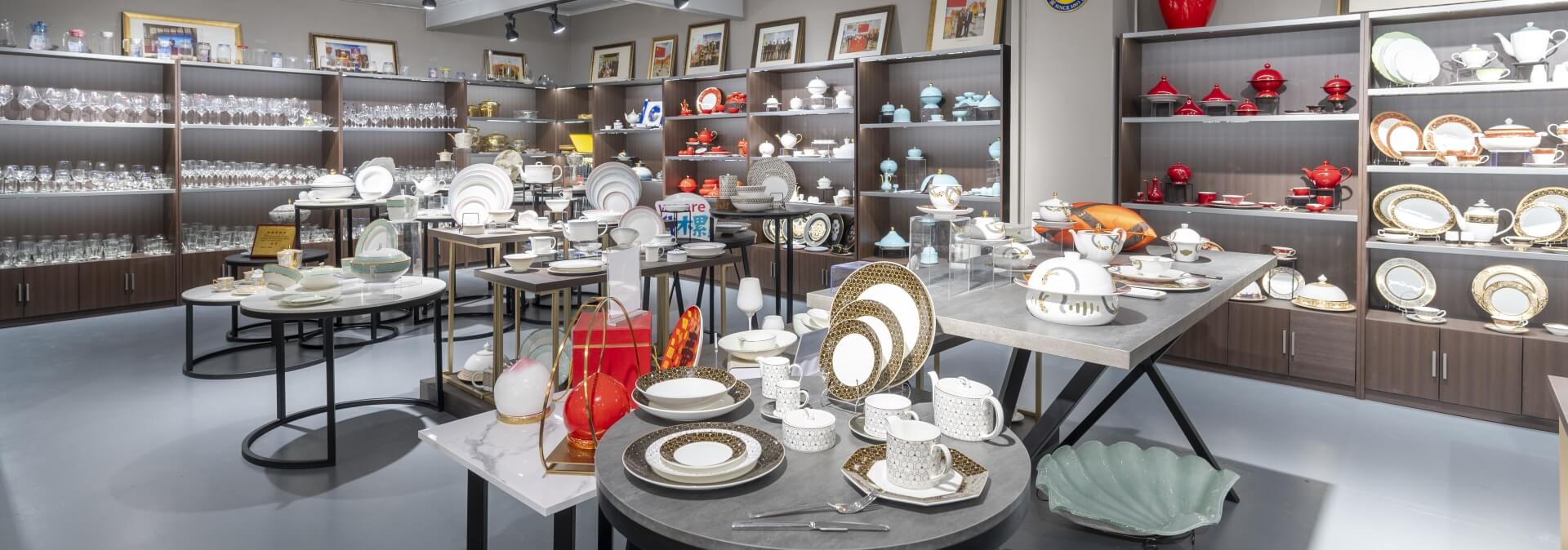
For multi-property operators, consolidating procurement saves time and reduces coordination headaches. PITO extends beyond ceramic tableware to offer glassware, cutlery, and luxury-grade bed linens. Sourcing a complete hospitality package from one supplier means unified quality standards and simpler logistics.
Making the right choice for your business
Not every operation needs the same thing from a supplier. The right choice depends on your scale, compliance requirements, and how much customization matters to your brand.
| Buyer Type | Priority | Recommended Supplier Profile |
|---|---|---|
| 5-star resort or luxury hotel | Durability, customization, global certifications, replenishment consistency | International manufacturer with OEM/ODM capability and long-term mold retention |
| Restaurant chain or catering group | Cost efficiency, batch consistency, fast delivery | Manufacturer with standardized production and export experience |
| Tableware wholesaler | Wide product range, competitive pricing, reliable supply | Full-service supplier with diverse catalog and flexible MOQs |
If your operation involves multiple properties, strict brand standards, or international compliance requirements, a supplier that combines pottery tradition with modern manufacturing capacity, like PITO, offers the stability and flexibility you need.
If you are running a single location with modest volume, a local supplier may offer faster turnaround and lower minimum orders. Just verify that their products carry the certifications your market requires.
Tip: Start with a pilot order. Test the product in your actual service environment. Run it through your dishwashers, have your staff handle it, put it on your tables. The sample that looks good in a meeting room is not the same as the plate that survives a Saturday dinner service.
FAQ
What certifications should a porcelain tableware supplier have?
Look for ISO 9001 for quality management, FDA or LFGB for food-contact safety, and CE for European market compliance. These show that the supplier follows documented processes and produces tableware safe for repeated food-contact use.
Can I customize dinnerware with my hotel’s logo and colors?
Yes. Suppliers like PITO offer full OEM and ODM services, including custom shapes, logo decals, exclusive patterns, and branded packaging. Custom work typically requires a minimum order quantity and a longer lead time. Ask for specifics during your initial inquiry.
How does pottery tradition affect product durability?
Suppliers with decades of craft experience understand how raw material selection, firing temperature, and glaze formulation interact. This shows up in products with better chip resistance, lower water absorption, and more consistent appearance across production batches, all of which reduce replacement costs in commercial settings.
What is the typical minimum order quantity for porcelain tableware?
Most manufacturers set an MOQ of around 500 pieces per item. Custom designs or new molds may require higher minimums. Always confirm MOQ before placing an order, and consider starting with a sample order to evaluate quality.
How do I verify a supplier’s manufacturing capabilities?
Request a live video factory tour, ask for production-line photos taken for your inquiry, and review copies of their business license and certifications. A genuine manufacturer will provide these without hesitation.
What after-sales support should I expect?
A reliable supplier provides dedicated account management, clear warranty policies, fast replacement for transit damage, and replenishment matching for repeat orders. Ask about mold retention policies and whether they keep batch records for future color matching.


LET'S TALK TOGETHER
Lorem ipsum dolor sit amet, consectetur estor adipi isicing elit, sed do eiusmod tempor este uterre incididui unt ut
