


PITO Article
Ceramic Dinnerware Supplier: How Restaurants Compare Quality and Price
A restaurant owner comparing a ceramic dinnerware supplier faces the same puzzle every buyer hits: two quotes look close, but one will survive a year of service and one will not. Price is the easy number to read. Quality is the number that shows up later, on the dish rack and the replacement invoice. This guide gives restaurants a practical way to compare suppliers on both.
We write it as a hospitality tableware partner, not a catalog. The goal is to help you read a sample and a quote the way a kitchen actually uses them.
Start With the Body, Not the Picture
The body is the fired clay underneath the glaze. For restaurant use, the two families that matter most are fine porcelain and fine bone china. Fine porcelain is fired around 1320°C in a single high temperature pass, which gives a dense, vitrified body suited to high turnover service. Fine bone china carries animal bone ash and reads lighter and more translucent, suited to a refined front of house feel.
Neither is “better” in rank. They fit different service moments. A porcelain dinnerware supplier conversation should start from your service type, not from a generic “premium” label.
| Attribute | Fine porcelain | Fine bone china |
| Firing | About 1320°C, one pass | Two passes, about 1320°C and 1280°C |
| Feel | Solid, durable | Lighter, more translucent |
| Best fit | Banquet, buffet, daily high turnover | Fine dining, afternoon tea |
| Bone ash | None | Present |
Read the Sample Like a Kitchen
A sample on a desk tells you little. A sample in service tells you most of what you need:
- Weigh it in the hand during a busy shift.
- Stack it with your real shelving depth.
- Plate a real dish and check the rim and well.
- Run it through your dishwasher for a week if possible.
Dishwasher safety comes from the glaze and whether the piece has metallic decoration, not from the body alone. If commercial dishwasher use is part of the requirement, check the specific product specification and care instructions rather than judging suitability from the material alone. Performance can depend on the body, glaze, decoration, firing, and actual washing conditions.
For a hospitality project, samples should be tested under the intended washing conditions where appropriate, especially before placing a large production order.
Reading a Sample Spec Sheet
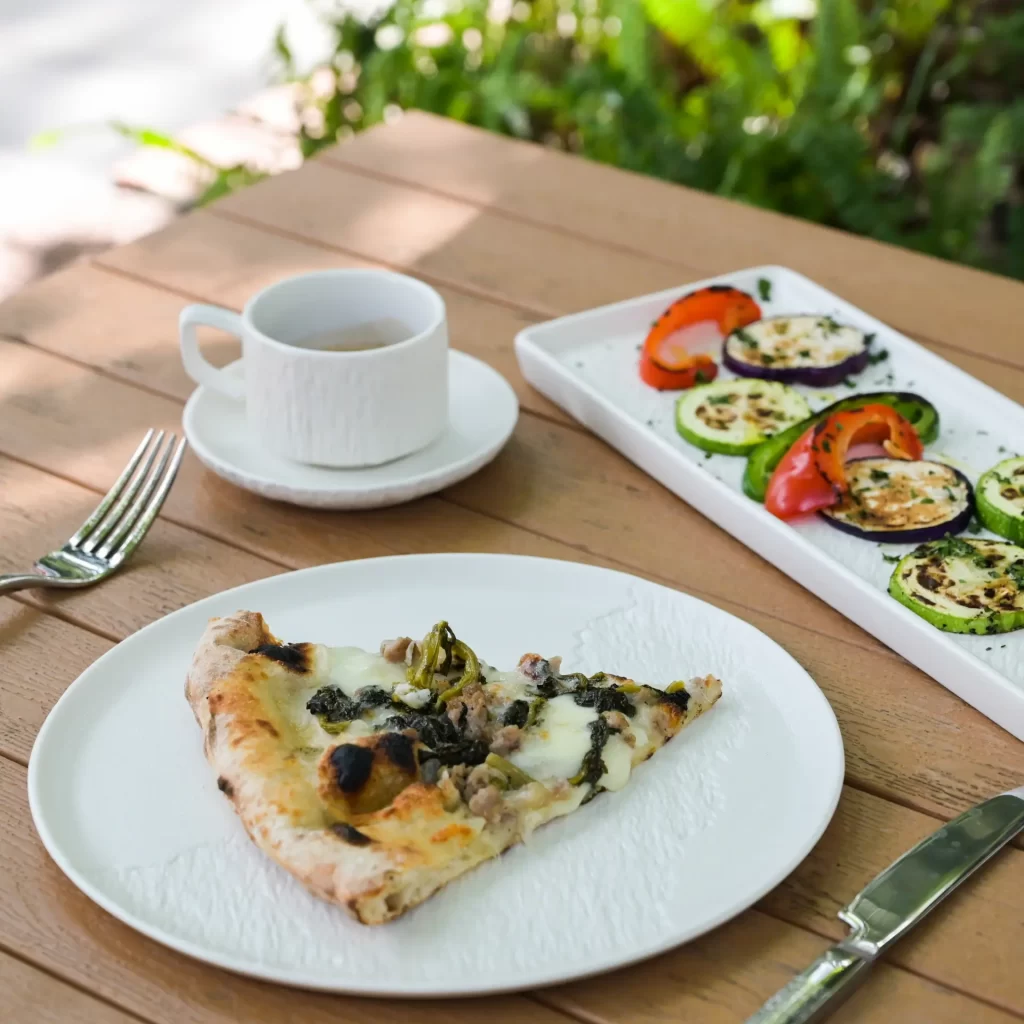
A proper spec sheet removes guesswork. Look for four numbers: diameter, weight, glaze code, and decal code. Diameter and weight tell you if the piece fits your stack and your plate presentation. The glaze and decal codes let you reorder the exact same surface later.
If a supplier cannot give you a coded spec sheet, that is a warning. A clear specification helps reduce variation between the original order and later replenishment. Diameter, weight, glaze or decoration references, and the approved sample should be kept as the basis for repeat orders.
The specification does not replace production controls, but it gives both buyer and supplier a clear reference when the next order is placed.
Price Structure: What the Number Hides
When a restaurant dinnerware supplier quotes, the unit price is only one line. Read the rest:
- Decoration method: hand decal, printed decal, or plain glaze each carry different minimums.
- Packaging: safe pack for ocean freight costs more but cuts breakage.
- Tooling: a custom mold may carry a one time fee.
- Reorder terms: price holds only if the spec and the sample stay locked.
A cheaper quote with weak packaging can arrive with broken cases, which erases the saving.
Supplier Promises Versus Reality
Sales replies often sound alike. The gap between promise and reality shows in specifics:
- “High quality” with no spec sheet means little.
- “Fast delivery” with no trigger date means nothing.
- “We can match any color” with no approved sample system means risk.
Ask each candidate to turn general promises into measurable terms, such as a confirmed specification, sample approval process, lead time trigger, or replenishment procedure. These details make supplier comparisons more objective.
Bulk Purchase Versus Stock Purchase
Restaurants choose between buying bulk ceramic dinnerware for a launch and topping up from stock later. Each has a trade off.
Bulk purchase lowers unit cost and locks the shade for the whole order, but it ties up cash and storage. Stock purchase keeps flexibility and lets you reorder in small steps, but the unit price is higher and you depend on the supplier holding the pattern. Most restaurants do both: a bulk launch order plus a standing reorder plan.
Building a Long Term Supplier Relationship
The best restaurant supplier relationships are not about one order. They are about a locked sample, batch records, and a reorder that matches. Share your menu changes and your seasonal volume with the supplier so they can plan capacity for your peaks.
A supplier that knows your par level and your opening dates becomes a partner. That partnership is what keeps your tabletop consistent when you grow from one site to three.
We help restaurants turn this checklist into a decision instead of a guess. Our eight step hotel and restaurant flow applies to restaurants too:
- Concept and menu analysis – the menu decides the shape and rim.
- Material and shape selection – fine porcelain for turnover, fine bone china for refinement.
- Custom design – in house shape, glaze, and decal carry your brand.
- Sampling – physical samples tested in your service.
- Operational testing – stacking, carrying, and line flow checked before bulk.
- Production and QC – own factory with ISO 9001 discipline.
- Delivery – planned to your seat count and opening.
- Replenishment – reorders match the approved sample.
PITO is our sister brand under the same manufacturer, Guangdong P&T Porcelain Co., Ltd. The same hospitality tableware program method backs both, so the comparison framework above works across our ranges.
When to Switch Suppliers
If a supplier you use starts missing the locked sample, slips lead times, or stops providing batch records, treat it as a signal rather than a one off. A single late order is normal; a pattern of drift is not. Keep a second qualified source approved so a switch does not stall service.
Switching is easier when you have archived the master sample and the spec sheet. The new source matches the approved piece, not a memory of it. That paper trail is what makes a supplier change smooth instead of a fresh gamble.
Reading References and Reviews
Ask each candidate for two reference projects you can actually contact, ideally in hospitality. A reference that confirms consistent shade across reorders tells you more than a list of logos. Online reviews help for consumer brands, but for B2B tabletop the reference call is the real check.
When you call, ask one question: did the second order match the first? That single answer reveals whether the supplier runs a program or just a shipment.
Frequently Asked Questions
Q: How do I tell fine porcelain from fine bone china by hand?
Fine bone china feels lighter and shows more light through the wall. Fine porcelain feels denser and more solid. Both are strong; the choice follows your service style, not a quality rank.
Q: Is a higher price always better quality?
No. Price tracks material, decoration, packaging, and volume. Read the full quote and test a sample in service before judging. A mid price piece with safe packaging and a locked sample often beats a cheap one that breaks in transit.
Q: What is a normal reorder lead time for restaurants?
It varies by shape and decoration, but ask for a written number from sample approval. Plan replenishment around your busiest season, not just the launch, so breakage never empties a shelf.
Q: Should I buy bulk or stock for a new restaurant?
Most do both. A bulk launch order locks the shade and lowers unit cost, then a small standing reorder plan covers breakage and growth. Confirm the supplier can hold the pattern between orders before you rely on the stock route.
Talk to a Tableware Partner
If you are weighing a ceramic dinnerware supplier for a restaurant, send us four details so we can scope it properly: your project type (new opening, renovation, or expansion), your service concept (fine dining, banquet, buffet, or cafe), your expected quantity (by cover or by seat), and your customization needs (shape, glaze, decal, or brand color). Reach P&T Royal Ware to start.


LET'S TALK TOGETHER
Lorem ipsum dolor sit amet, consectetur estor adipi isicing elit, sed do eiusmod tempor este uterre incididui unt ut
