




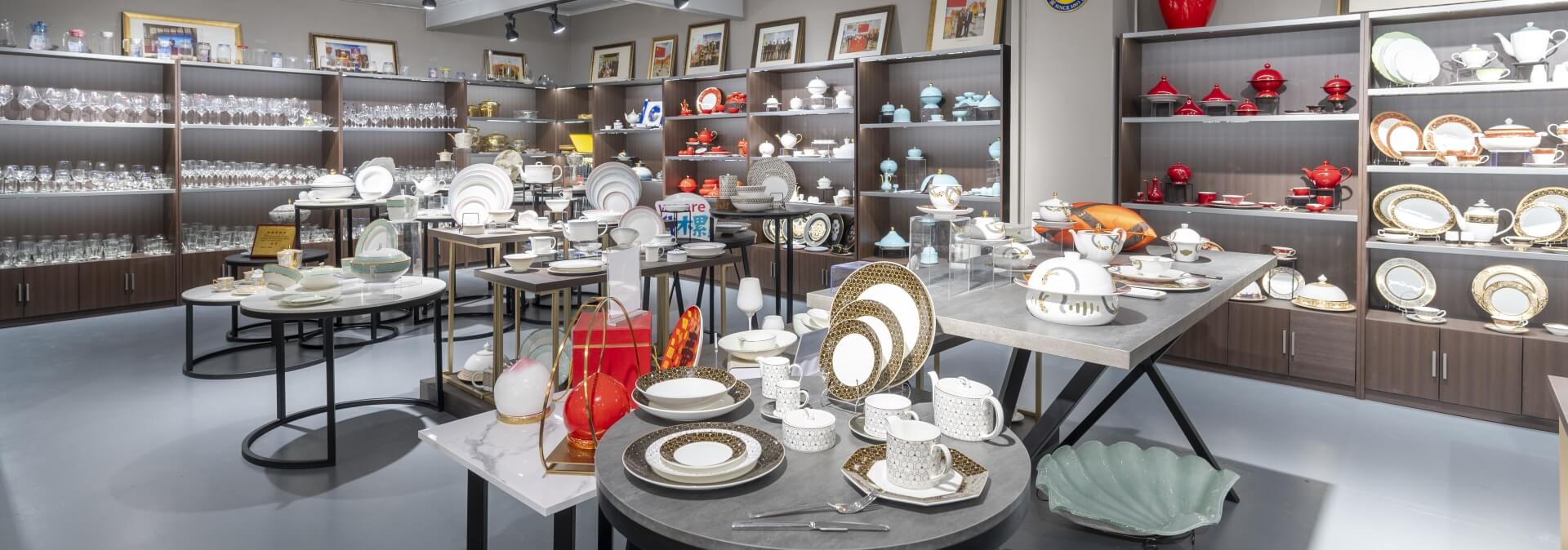
PITO Article
Bone China Decal Tableware for Hotels and Restaurants
If you’re sourcing tableware for a luxury hotel or high-end restaurant, bone china with decal decoration is probably already on your radar. It’s lighter than regular porcelain, has a warm translucent quality that ordinary tableware can’t match, and takes decal decoration — including genuine gold — very well.
This guide covers what bone china actually is, how it differs from other porcelain types, what to look for when buying, and what P&T Royal Ware’s Magic Castle series brings to the table.
What is bone china
Origins
Bone china was developed in England in the late 18th century. British potters were trying to replicate Chinese porcelain and found that adding animal bone ash to the clay produced a warm, creamy white color with an unusual combination of lightness and strength. It broke China’s monopoly on high-quality porcelain and became the standard for fine tableware in Europe.
The basic formulation hasn’t changed much:
| Component | Percentage | Purpose |
|---|---|---|
| Bone ash | 30%-50% | Gives the creamy white color and high toughness |
| Kaolin | 20%-30% | Forms the body, holds shape during forming |
| Feldspar | 10%-25% | Flux — lowers firing temperature |
| Quartz | 5%-15% | Adds strength and thermal resistance |
The bone ash is what makes it different from other porcelain. During firing it creates a fine calcium phosphate structure that gives bone china both its translucency and its surprisingly good impact resistance.
Decal decoration
Decal is the standard way to put detailed, consistent patterns on bone china. Hand-painting is beautiful but inconsistent — decal ensures every piece looks the same, which matters when you’re running a restaurant.
Three main methods:
On-glaze decal — the most common for bone china. The greenware is fired, the decal is applied to the glazed surface, then fired again at 700-900°C. Colors are vivid and saturated because the lower temperature doesn’t affect the body.
In-glaze decal — pigments sink into the unfired glaze layer and fuse during firing. The pattern ends up inside the glaze itself, which makes it more durable. Good for commercial environments where tableware goes through dishwashers hundreds of times.
Underglaze decal — pattern goes on before the clear glaze, then everything fires together. Theoretically the most durable option since the pattern is protected under the glaze.
The Magic Castle series uses primarily on-glaze decal with 24K gold leaf, featuring castle, garden, and geometric motifs.
Bone china vs. regular porcelain
If you’re comparing options for a hospitality setting, here are the practical differences:
| Bone china | Hard-paste porcelain | |
|---|---|---|
| Bone ash content | 30%-50% | 0% — mostly kaolin and feldspar |
| Firing temperature | 1200-1300°C (bisque) + 1100-1150°C (glaze) | 1280-1400°C |
| Density | Lower — thinner, lighter walls | Higher — denser, heavier |
| Translucency | Strong — soft glow when held to light | Minimal — opaque or slightly translucent at edges |
| Feel | Warm, light, delicate | Solid, heavy, substantial |
| Chip resistance | Good — bone ash adds toughness | Very good — especially vitrified bodies |
| Color | Warm ivory/cream white | Cool, bright white |
| Best use | Fine dining, afternoon tea, VIP service, weddings | Buffets, banquets, high-turnover restaurants |
| Price | Higher | Mid to high depending on grade |
| Maintenance | Gentle washing to protect decals | Handles commercial dishwashing well |
The translucency test
Hold a bone china plate up to a light. You’ll see light passing softly through the body, with a warm, slightly glowing quality. Regular porcelain doesn’t do this — it’s opaque or barely translucent at the edges. This is the single easiest way to tell the difference, and it’s the main reason bone china is still the standard for upscale dining.
Total cost of ownership
Bone china costs 20-30% more upfront than comparable professional porcelain. But look at it over several years:
- Lower breakage rates — bone china’s toughness means fewer emergency reorders and less brand inconsistency from mismatched replacements.
- Longer service life — bone china can last decades with reasonable care. Lower-quality porcelain may need replacing every 2-3 years in a busy environment.
- Brand impact — whether this matters depends on your concept. For fine dining, it matters. For a high-volume buffet, maybe not.
What makes bone china decal tableware different
Lightweight strength
This is the counterintuitive thing about bone china: the walls can be very thin, yet the pieces hold up well in commercial use. The Magic Castle series uses P&T Royal Ware’s twice-fired process:
- Bisque firing at 1320°C — builds a dense body framework.
- Glaze firing around 1280°C — creates a smooth, glass-like surface.
- Decal firing at 700-900°C — sets the pattern without damaging it.
The result is thin-walled tableware that’s light in the hand but structurally sound enough for daily service.
The creamy white tone
Bone china has a naturally warm, slightly ivory color — not the cold, blue-white of ordinary porcelain. The industry calls it “Royal White” or “Cream White.” It photographs well and provides a warm backdrop for food presentation.
The Magic Castle series builds on this base with castle and garden decal motifs in gold.
24K gold decals
The gold decoration on the Magic Castle series is genuine 24K gold, not gold-colored paint. The process:
- Gold is ground to an extremely fine powder and mixed with medium oils.
- Applied to decal paper via screen printing or transfer printing.
- Fired under strict temperature control for even layers and good adhesion.
- The finished gold layer has actual metallic texture — you can feel it with your fingertips.
Genuine gold decal tableware holds up over time in ways that metallic paint doesn’t. The gold doesn’t fade or tarnish. It’s also a genuine differentiator for gifting and VIP presentations.
Durability
Modern bone china is not fragile. The Magic Castle series goes through a 28-step quality process including thermal shock testing, water absorption testing, and dishwasher resistance testing.
The glaze is formulated for commercial dishwashing. That said — if you’re running a high-volume operation where tableware gets banged around constantly, hard-paste porcelain may be the more practical choice. Bone china is best suited to settings where the staff handles it with reasonable care.
Sourcing tip: Ask suppliers for third-party dishwasher resistance test reports — specific cycle counts, visual scoring, before-and-after photos. Don’t rely on marketing claims alone.
Design options
The Magic Castle series offers a few design directions:
- Castle motifs — the signature look, works well for themed dining experiences.
- Garden motifs — florals and natural elements, less formal.
- Geometric patterns — cleaner lines for contemporary settings.
- Gold rim detailing — metallic accents for a more traditional luxury feel.
P&T Royal Ware also offers full OEM/ODM customization: patterns, colors, shapes, sizes, logo integration, and packaging. If you need tableware that’s specific to your brand, that’s an option.
The Magic Castle series
What it is
P&T Royal Ware’s Magic Castle series is their high-end bone china decal line, aimed at luxury hotels, boutique restaurants, upscale banquets, and premium gifting.
The pitch is straightforward: detailed decal patterns, genuine 24K gold, full customization, and export-grade quality certifications.
Certifications
P&T Royal Ware has been exporting for over 20 years. All products carry:
| Certification | Market | What it means |
|---|---|---|
| FDA | US | Food contact safety — lead and cadmium limits |
| CE | EU | European health, safety, and environmental compliance |
| LFGB | Germany/Europe | German food safety standard — one of the strictest globally |
| ISO9001 | Global | Quality management — batch-to-batch consistency |
The series also meets British Standard BS 4034 for vitrified tableware, which covers chip resistance, thermal shock, and water absorption.
Manufacturing process (abbreviated)
- Raw material inspection — chemical composition and particle size testing for each batch.
- Precise batching — controlled ratios for formulation consistency.
- Vacuum pugging — removes air bubbles for denser bodies.
- High-pressure forming — dimensional consistency across pieces.
- Bisque firing at 1320°C.
- Initial quality check — defective pieces removed.
- Glaze application.
- Glaze firing at 1280°C.
- Decal application — patterns positioned on the glazed surface.
- Decal firing at 700-900°C.
- Final quality inspection — every piece checked.
- Export-grade packaging.
Steps 13-28 are continuous quality monitoring and traceability throughout the process.
Customization
| Dimension | Options |
|---|---|
| Pattern design | Castle, garden, geometric, custom motifs |
| Color scheme | 24K gold, platinum, custom matching |
| Form | Full range — plates, bowls, cups, teapots, custom sizes and profiles |
| Branding | Logos, hot stamping, engraving |
| Packaging | Gift boxes, carry bags, custom inserts |
Procurement guidance
Where bone china decal makes sense
Good fit:
- Fine dining and executive lounges in 4-5 star hotels
- Boutique restaurants where the dining experience itself is the selling point
- Upscale events — weddings, VIP receptions, private banquets
- Premium corporate gifts with custom branding
- Afternoon tea and dessert service
Not ideal:
- High-turnover restaurants (3+ rounds/hour)
- Quick-service or takeaway-focused establishments
- Budget mass dining
Quality checks you can do on-site
Translucency: Hold the plate up to a light. Quality bone china shows uniform, soft light transmission. Uneven bright or dark spots are a bad sign.
Sound test: Tap the edge with your finger. You should hear a clear, sustained ring. A dull or short sound means the body density is off.
Decal edges: Look at the edges of the pattern closely under good light. Low-quality decals show jagged edges, blurring, or misregistration. The Magic Castle series has sharp, clean edges that hold up under magnification.
Documentation to request before ordering
- Food contact safety certifications (FDA, LFGB)
- Dishwasher resistance reports from a third-party lab — cycle counts, scoring, photos
- Strength test results — chip resistance, thermal shock
- Color fidelity documentation (ΔE colorimetry) for batch consistency
- Batch traceability policy for reorders
The company has been manufacturing and exporting high-end porcelain and bone china for over 20 years. Clients include international hotel groups, restaurant chains, culinary competitions, and foodservice distributors across five continents.
They’re also an official tableware supplier for the Bocuse d’Or — the international cooking competition sometimes called the “culinary Olympics.” That’s not a marketing badge; it means professional chefs competing at the highest level choose to work with this tableware.
Contact
- Email: dinnerware@pitochina.com
- WhatsApp: +86 15217732808
- Response time: within 24 hours
Is the Magic Castle series right for you
If you’re sourcing tableware for a setting where presentation matters — fine dining, luxury hotels, high-end events — bone china with genuine gold decals is worth considering. The Magic Castle series specifically makes sense if you want detailed patterns with real gold, need customization, and want export-grade quality with full certification documentation.
For detailed pricing and samples, contact the P&T Royal Ware team directly.
P&T Royal Ware — porcelain and bone china dinnerware, hotelware, giftware, and custom solutions. Over 20 years in the industry.


LET'S TALK TOGETHER
Lorem ipsum dolor sit amet, consectetur estor adipi isicing elit, sed do eiusmod tempor este uterre incididui unt ut
